Social media has become more than just a tool for artists. It’s a gallery, a shop window, a networking space — and, at times, a source of pressure.
For those of us creating work in a digital age, it offers both opportunity and challenge in equal measure.
The Digital Megaphone
For many artists, social media is the main way our work reaches the world.
It allows us to connect with people who would never walk into a physical gallery. Collectors, followers, and casual viewers can all encounter the work in a moment — often from the other side of the world. I’ve sold paintings to people I’ve never met, purely through that exposure, which still feels remarkable.
Platforms like Instagram, Facebook and TikTok have effectively become extensions of our websites, giving people a way to discover the work, follow its development, and engage with it over time.
The Algorithm Shift
That reach, however, isn’t what it used to be.
There was a time when posting a finished painting was enough to generate attention. Now, visibility often depends on how well you understand the platform itself — hashtags, timing, video content, engagement.
Artists and algorithms are constantly negotiating.
Organic reach has dropped, and it can sometimes feel like visibility is being gradually moved behind a paywall. If you want your work to be seen, you’re encouraged to promote it.
That shift changes the role of the artist. You’re no longer just making work — you’re also managing content, editing video, and trying to stay visible in an environment that never really slows down.
When Art Becomes Content
One of the more uncomfortable changes is how easily art can become content.
Scroll for a few minutes and you’ll see work designed not necessarily to be meaningful, but to be watchable. Fast, attention-grabbing, built for the scroll.
In some cases, the process becomes the performance.
That can create a tension. Do you make work that holds attention for a few seconds, or work that asks for more time?
For artists who want the work to speak for itself, it can feel like the balance has shifted too far toward spectacle.
The Pressure to Keep Posting
There’s also the quieter pressure — the sense that you should always be sharing something.
When you see others posting constantly, it’s easy to feel like you’re falling behind. But that comparison can be misleading. Not all work happens at the same pace, and not all of it should.
I’ve felt that pull myself — the temptation to push something forward just to have something to share. But it rarely leads anywhere good. The work loses something in the process.
Time matters.
And the best pieces often come from allowing that time, rather than trying to compress it.
Followers and Gatekeeping
Another shift is how much weight is now placed on audience size.
Some galleries look at follower counts before they look at the work itself. Visibility has become a kind of currency, and not everyone has equal access to it.
Even within the platforms, reach can feel uneven. Many artists have noticed their audience shrinking unless they pay to boost posts, which raises broader questions about how open these spaces really are.
Staying Grounded in the Work
So where does that leave us?
For me, it comes back to the work.
Social media can support it, amplify it, and connect it to people — but it shouldn’t dictate it. The moment the work is shaped entirely by what performs well, something important gets lost.
Authenticity still matters. Process still matters. The reasons for making the work in the first place still matter.
And despite everything, people do still respond to that.
Keep Painting, Regardless
Social media is both useful and exhausting. It opens doors, but it also introduces noise.
Some days it feels like an opportunity. Other days it feels like a distraction.
But the work exists outside of that.
So keep painting, even if you’re not posting. Keep creating, even if it feels like no one is watching. Because the value of what you’re doing isn’t determined by an algorithm.
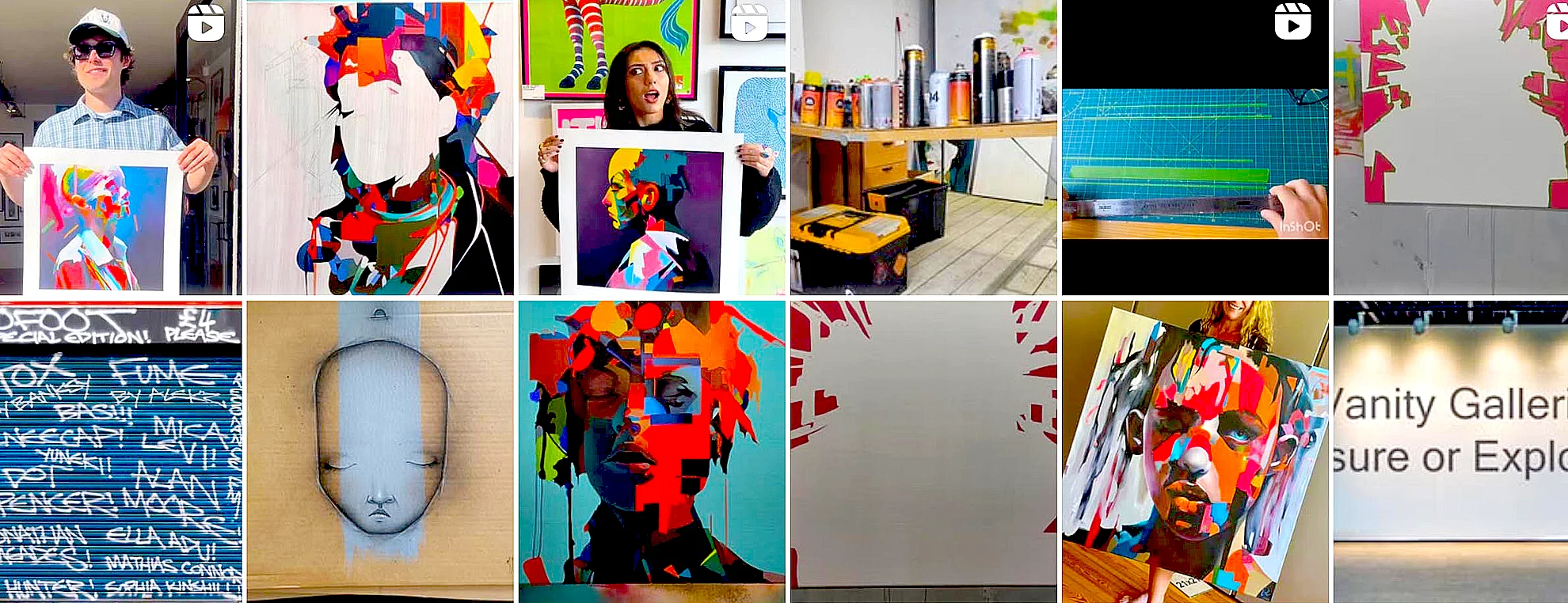
If you’re curious to see how that plays out in real time, you can find me on Instagram — where I share parts of the process alongside finished pieces.