One of the reasons I paint the way I do is to leave space for the person looking at it.
I’m not trying to show everything clearly or define a single meaning. I’m more interested in creating something that allows you to meet it halfway, rather than just observe it.
That’s usually what sits behind the question I get asked quite often — why I don’t paint faces in a more traditional, realistic way.
When everything is too clear
Painting something in a fully realistic way can be powerful, but it also tends to fix the meaning in place. You’re shown exactly what’s there, and to a large extent, how it should be read.
There’s less room to move within it.
The kind of ideas I’m drawn to don’t really sit that neatly anyway. They’re not always clear or easy to explain. They tend to build gradually, overlap, and shift depending on how you look at them.
If I painted them in a completely literal way, something would get lost in that process.
Leaving space on purpose
That’s where abstraction comes in.
By breaking the image into fragments and layers, the painting becomes less fixed. It doesn’t try to resolve everything straight away, which means there’s space left open.
That space isn’t accidental — it’s intentional.
It allows you to bring something of your own into the painting. Your own experiences, your own perspective, or even just a feeling you recognise without being able to fully explain it.
Instead of being told what to see, you’re given room to interpret it in your own way.
Using Protection as an example
A painting like Protection came from that approach.
The starting point was the idea of how we deal with pressure — not in an obvious, physical sense, but in quieter, more internal ways. The moments where things feel like they’re building, but you find a way to hold steady within it.
If that idea had been painted in a fully realistic way, it would likely feel more defined. Clearer at first glance, but also more limited in how it could be read.
Working abstractly allowed me to keep it open.
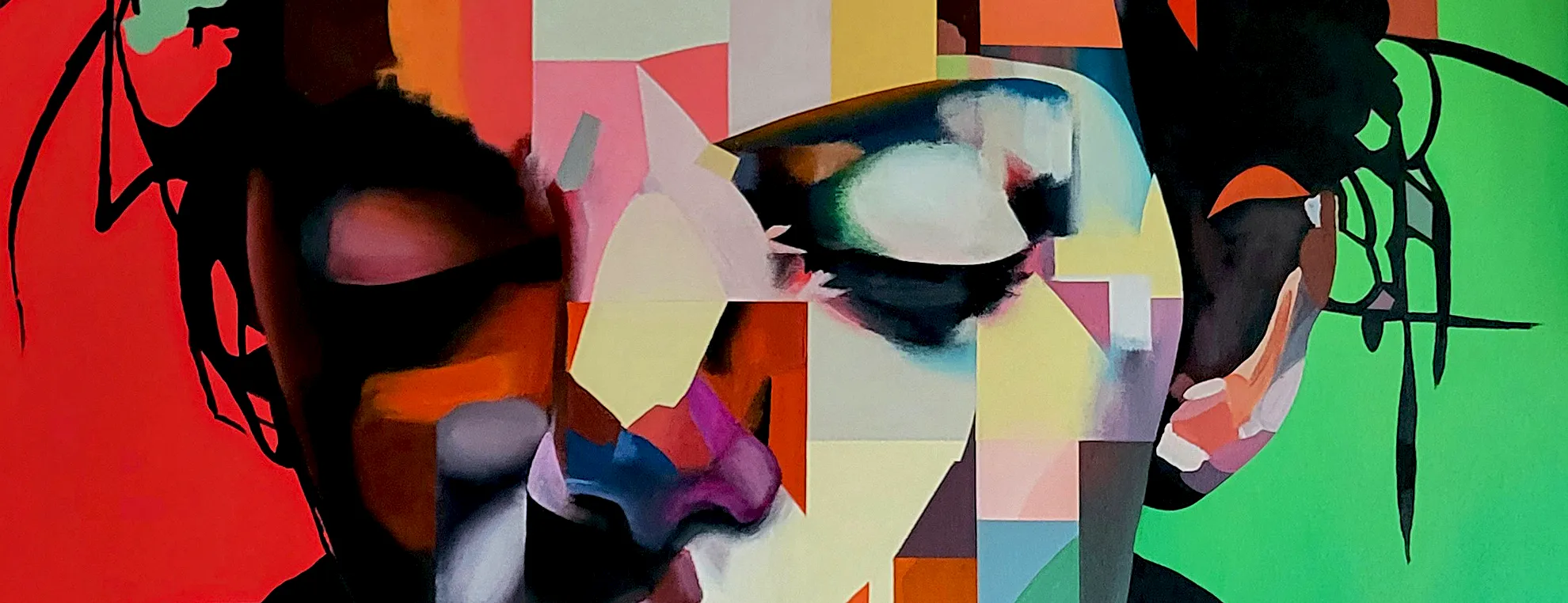
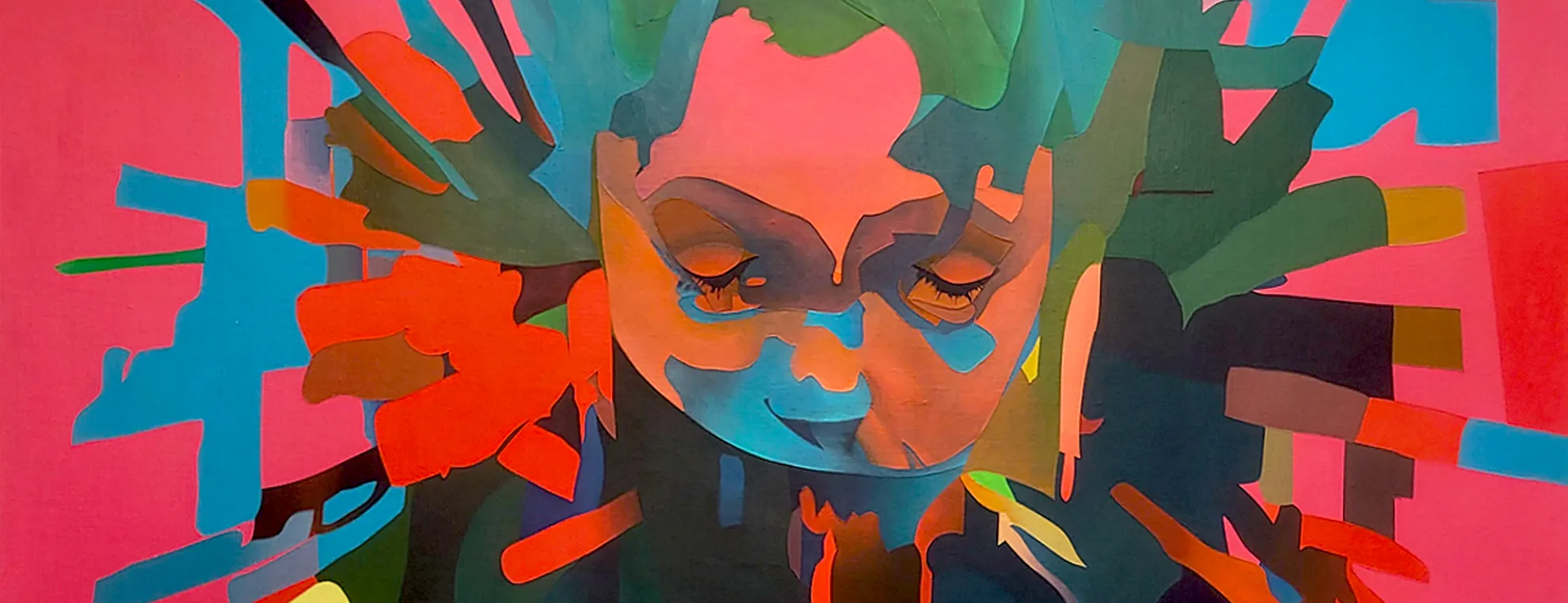
The figure turns inward, eyes closed, while everything else continues around it — fragments, colour, and movement coming in from different directions. Nothing has really stopped, but something in the centre holds.
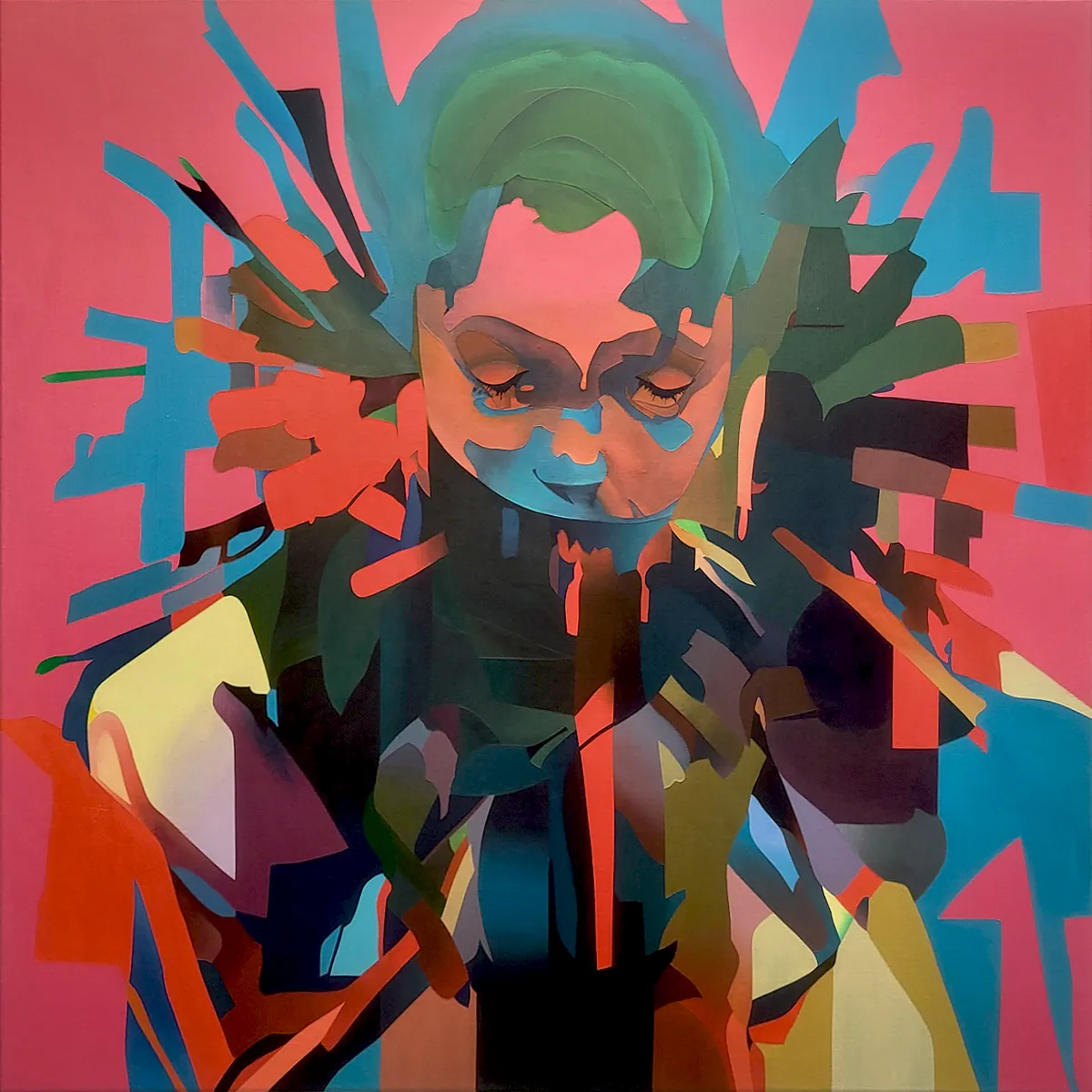
'Protection' - abstract portrait painting, 100cm x 100cm acrylic painting
What that means, though, isn’t fixed.
For one person, it might feel calm and controlled. For someone else, it might suggest distance or a need to step back. It might connect to something specific, or it might just feel familiar in a way that’s hard to put into words.
That variation is the point.
Where you come into it
A painting like this isn’t complete just because it’s finished in the studio.
It changes slightly depending on who’s looking at it.
That’s where you come in.
The space that’s left in the painting is there so you can bring something of your own to it. Not in a forced way, but naturally — whatever your reaction happens to be.
That might be a memory, a mood, or just a sense of recognition. It doesn’t need to be clear or fully formed.
It just needs to be yours.
Control and openness
There’s a balance in how the work is made that ties into this as well.
The process itself is quite controlled. Using masking means each section is planned and built up carefully. But what those sections create together can feel less predictable.
That contrast matters.
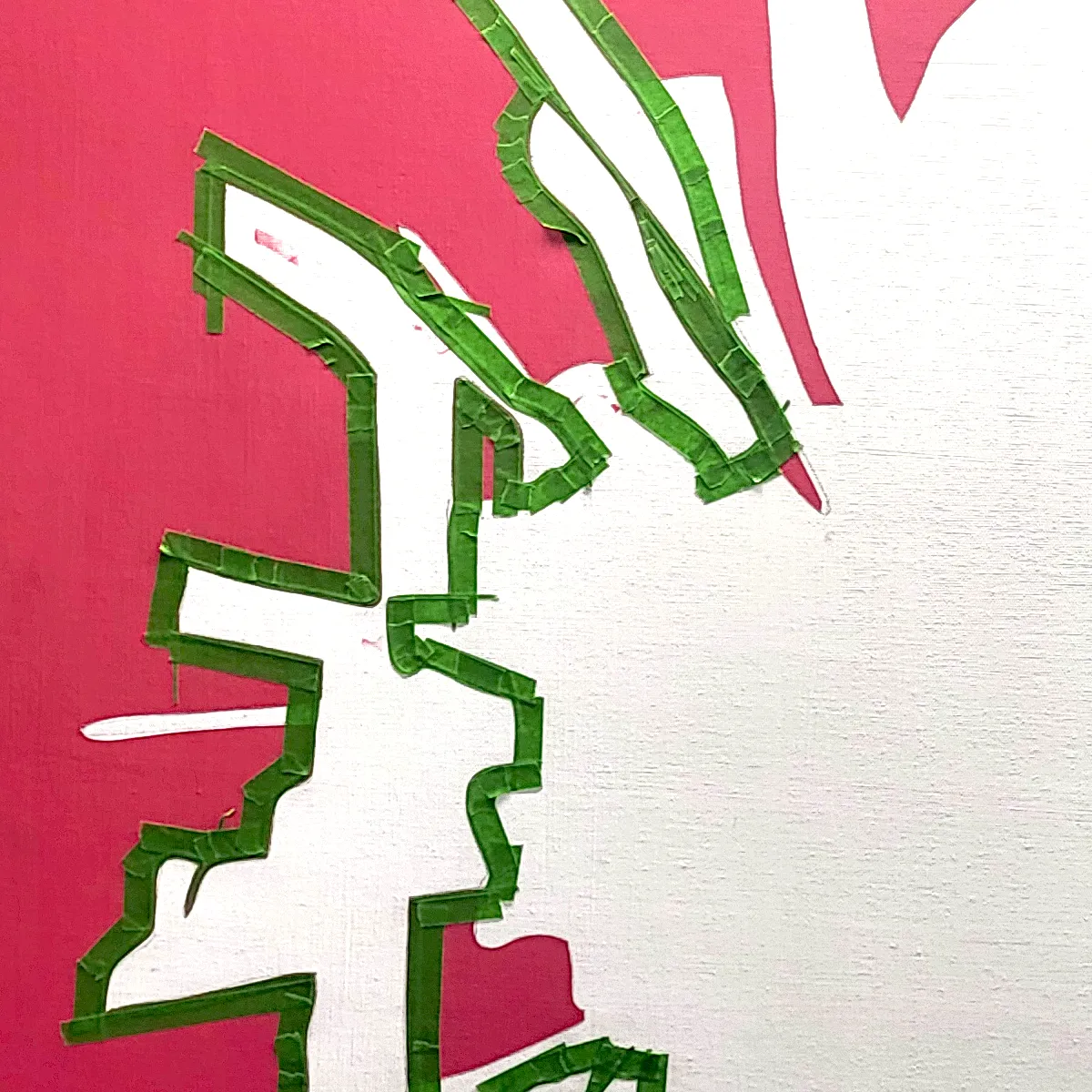
The masking process reflects the control we try to maintain during turbulent times
Because the world doesn’t organise itself neatly. Things overlap, build, and interfere with each other. The painting reflects that, but it doesn’t try to force it into a single, clean explanation.
It holds that tension instead.
Why the space matters
For me, leaving space in a painting isn’t about holding something back.
It’s about allowing more to exist within it.
If everything is clearly defined, there’s only one way to see it. But if something is left open, it can hold different meanings at the same time.
That’s closer to how these ideas actually feel in real life.
And it’s why that space is important.
You can view my original abstract painting Protection here.
Limited edition prints are also available here.