I’ve always been drawn to street art.
The first time I properly encountered it was when I was living in London, around the point it started to gain wider attention. Up until then, I had seen graffiti in passing, but this felt different. It wasn’t just about marking space. It was about saying something.
Recently, while going through old photos, I came across images from a street art exhibition in London that stayed with me more than I realised at the time.
That idea, of communicating visually rather than verbally, stayed with me. In many ways, it shaped how I approach my own work. Not necessarily in style, but in intent.
Where it started
Street art, or graffiti in its earliest form, didn’t begin in galleries.
It began with names.
Writers like TAKI 183 in New York and Cornbread in Philadelphia weren’t thinking about exhibitions or collectors. They were writing their names across the city, leaving a mark, creating visibility where there was none.
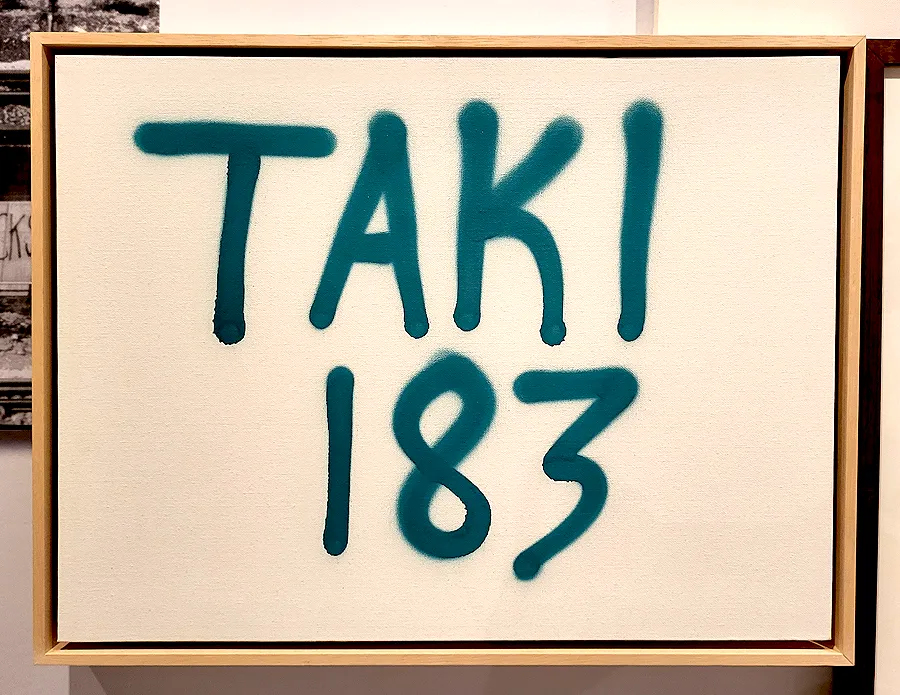
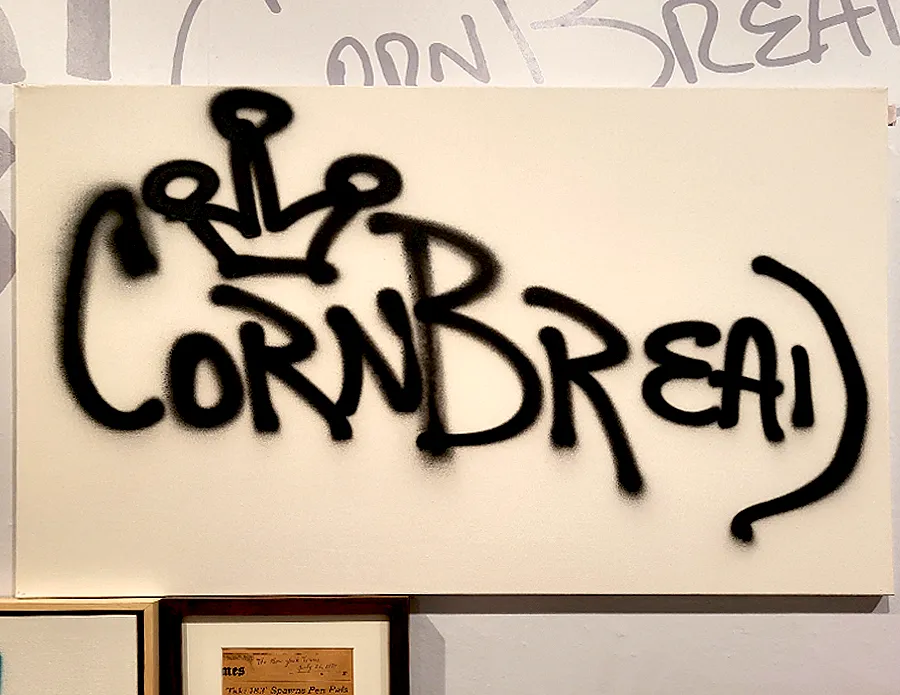
Early graffiti pioneers TAKI 183 and Cornbread, whose tagging laid the foundations for modern street art
It was direct, repetitive and, at times, obsessive.
But it was also a form of presence. A way of being seen.
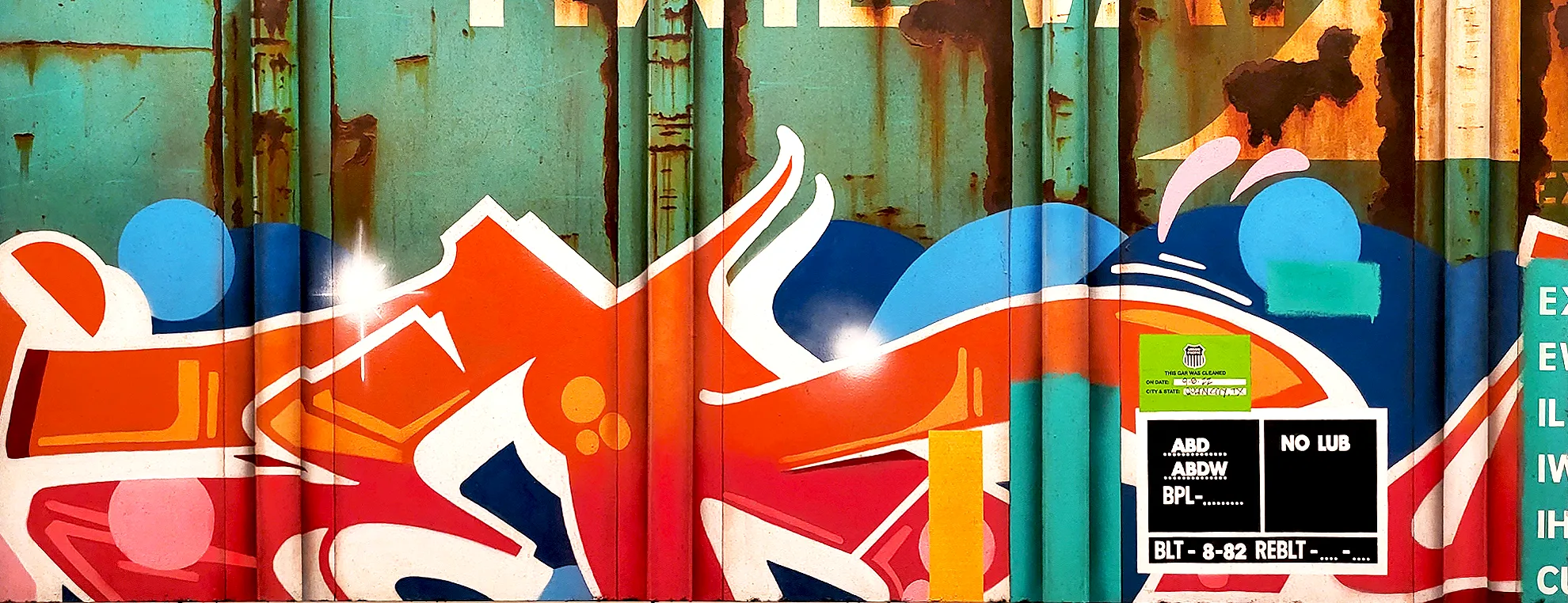
From there, it evolved. Styles developed. Lettering became more complex. Pieces became larger. Eventually, the work moved beyond names and into imagery, politics and identity.
What began as something raw and often illegal gradually expanded into something much broader.
Beyond the Streets
By the time Beyond the Streets London arrived at the Saatchi Gallery in 2023, that evolution was fully on display.
The exhibition wasn’t just about individual artworks. It was a wider look at the culture surrounding street art. Music, fashion and the visual language that had grown alongside it were all part of the experience.
Spread across three floors, it brought together artists from different countries, different eras and very different approaches to making work.
What stood out most was the range.
A language with many voices
Street art is often spoken about as if it’s one thing, but walking through the exhibition made it clear how varied it has become.
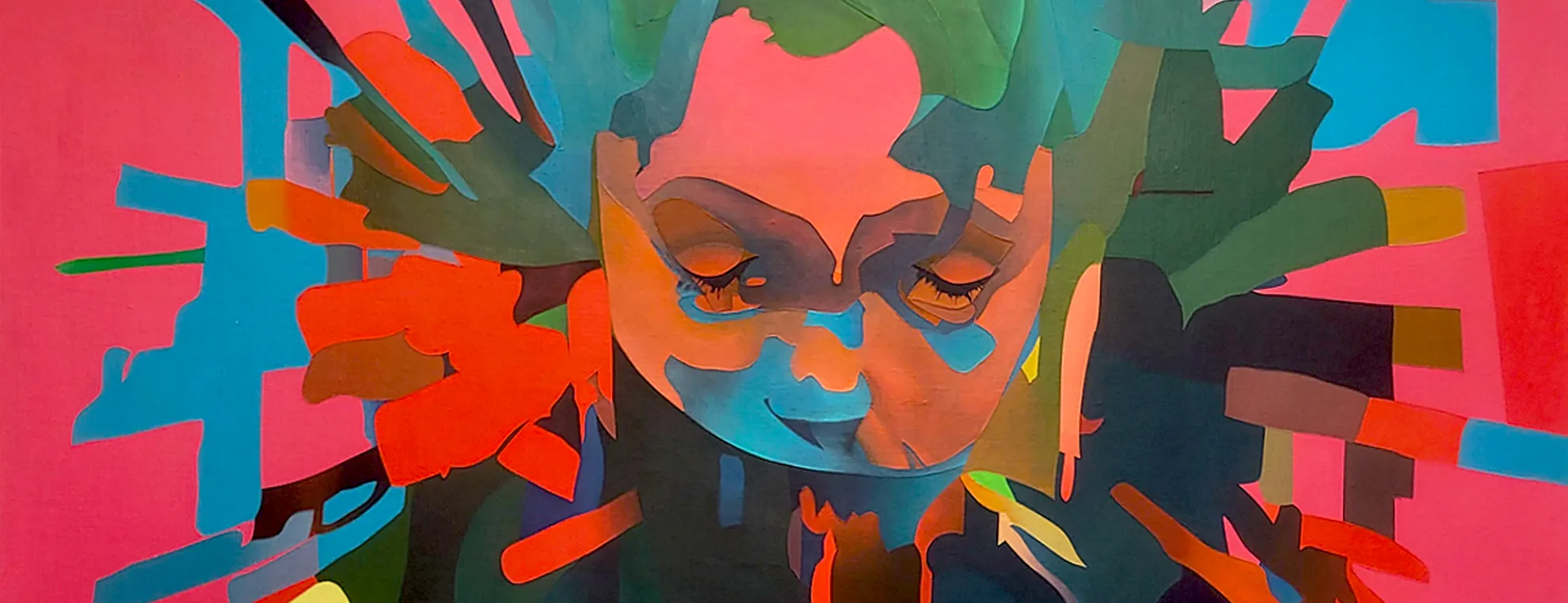
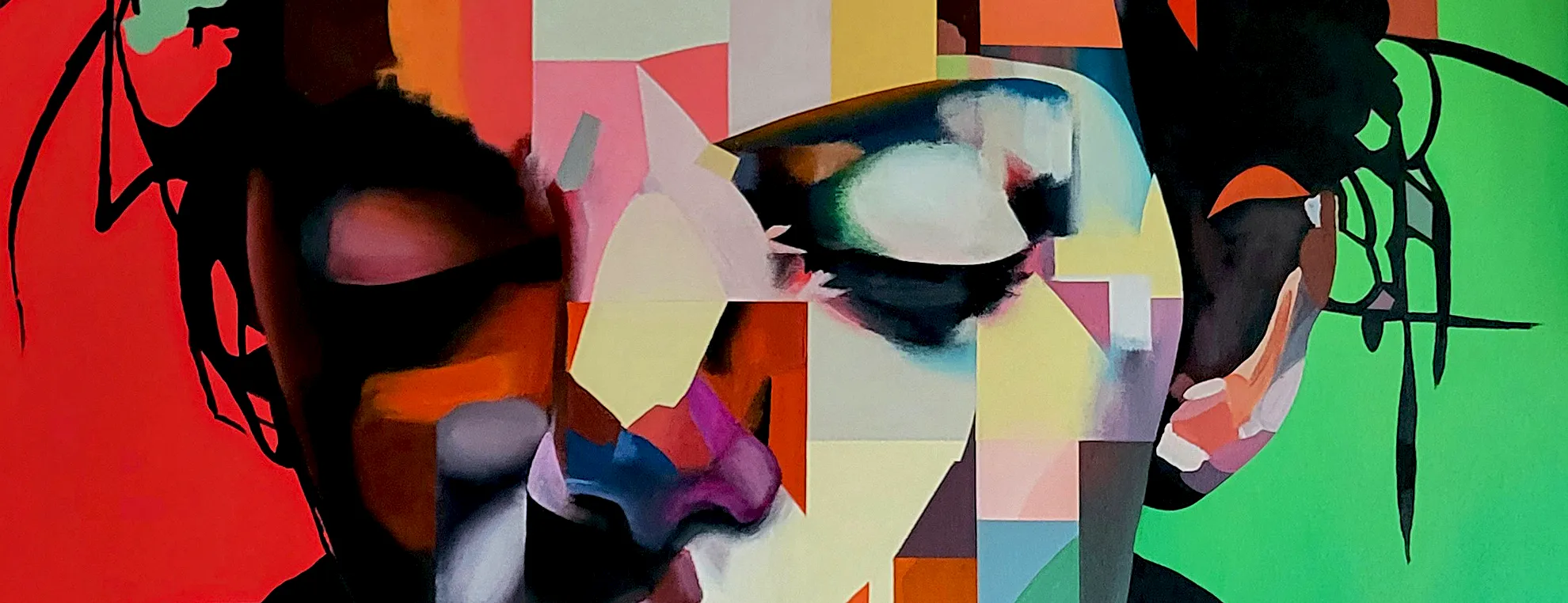
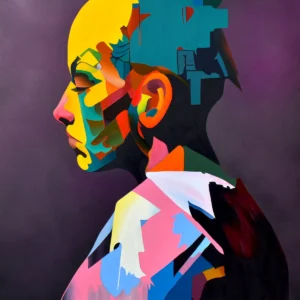
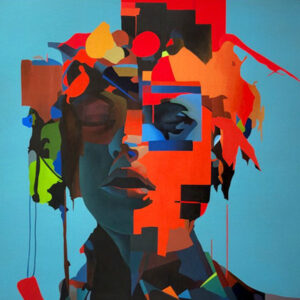
At one end, you have artists like Conor Harrington, whose work balances classical painting with abstraction. His figures feel rooted in history, but fractured, disrupted and reassembled in a way that feels entirely contemporary. I had the pleasure of seeing his work recently in a solo exhibition, and experiencing reinforced just how distinctive his approach is.
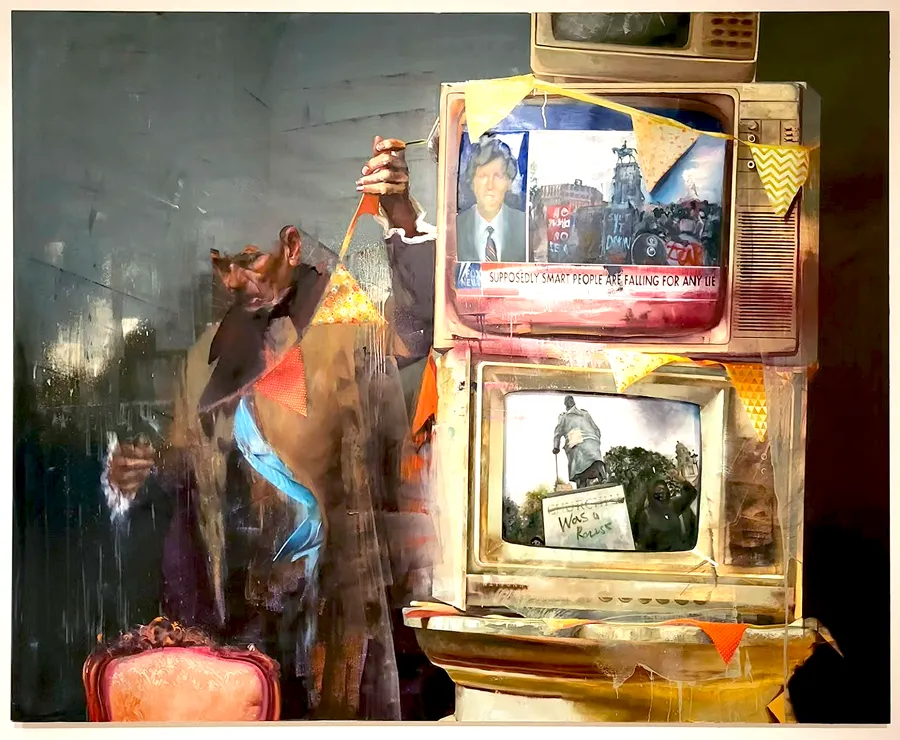
Painting by Conor Harrington, combining classical figuration with abstraction and contemporary themes
Then there are artists like Vhils, who approaches walls in a completely different way. Rather than adding to a surface, he removes from it, carving into plaster, brick and wood to reveal portraits embedded within the material itself.
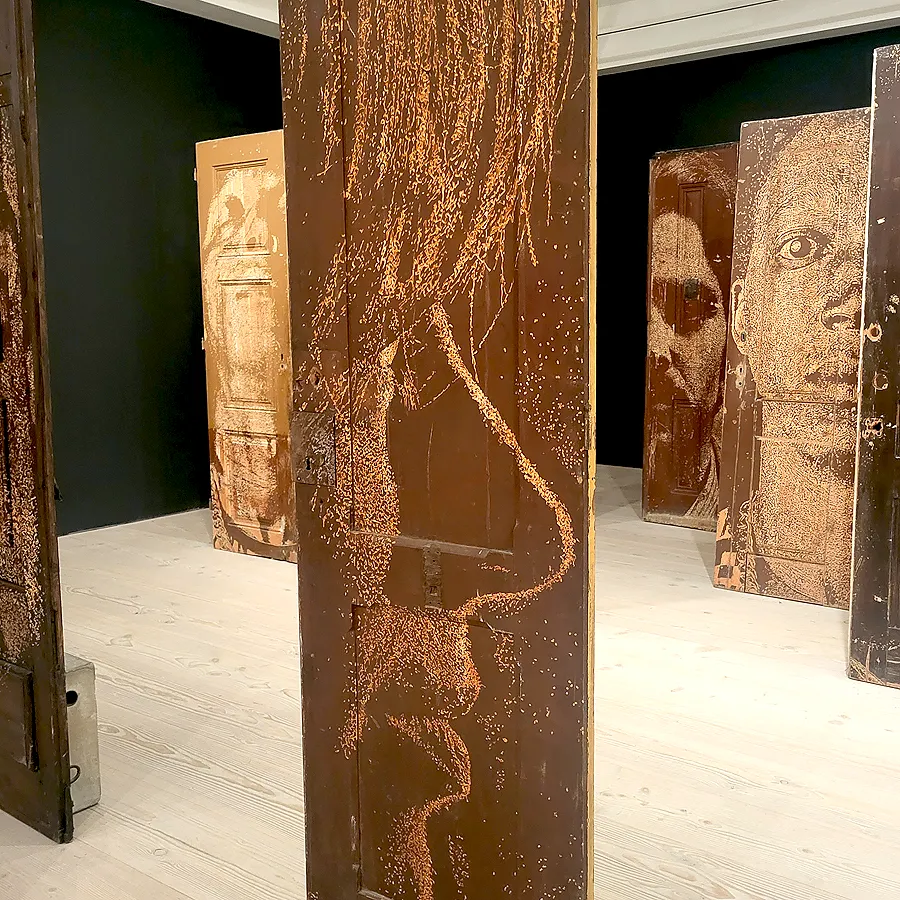
Carved portrait installation by Vhils, created by removing material rather than adding to it
Elsewhere, artists such as Shepard Fairey and Invader show how graphic, repeatable imagery can carry strong political or cultural messages across cities and countries. Their work is instantly recognisable, and it’s the kind of imagery that tends to stay with you once you’ve seen it. Seeing it again here reinforced just how widely embedded that visual language has become.
What becomes clear quite quickly is that “street art” is no longer a single style or approach. It’s a language with many dialects.
Inside the gallery
Seeing all of this work inside a gallery might once have felt strange.
But by 2023, it didn’t.
Many of the artists involved have exhibited internationally for years. Solo shows, gallery representation and institutional recognition are now part of the landscape. In that sense, the exhibition felt less like a disruption and more like a consolidation of what street art has become.
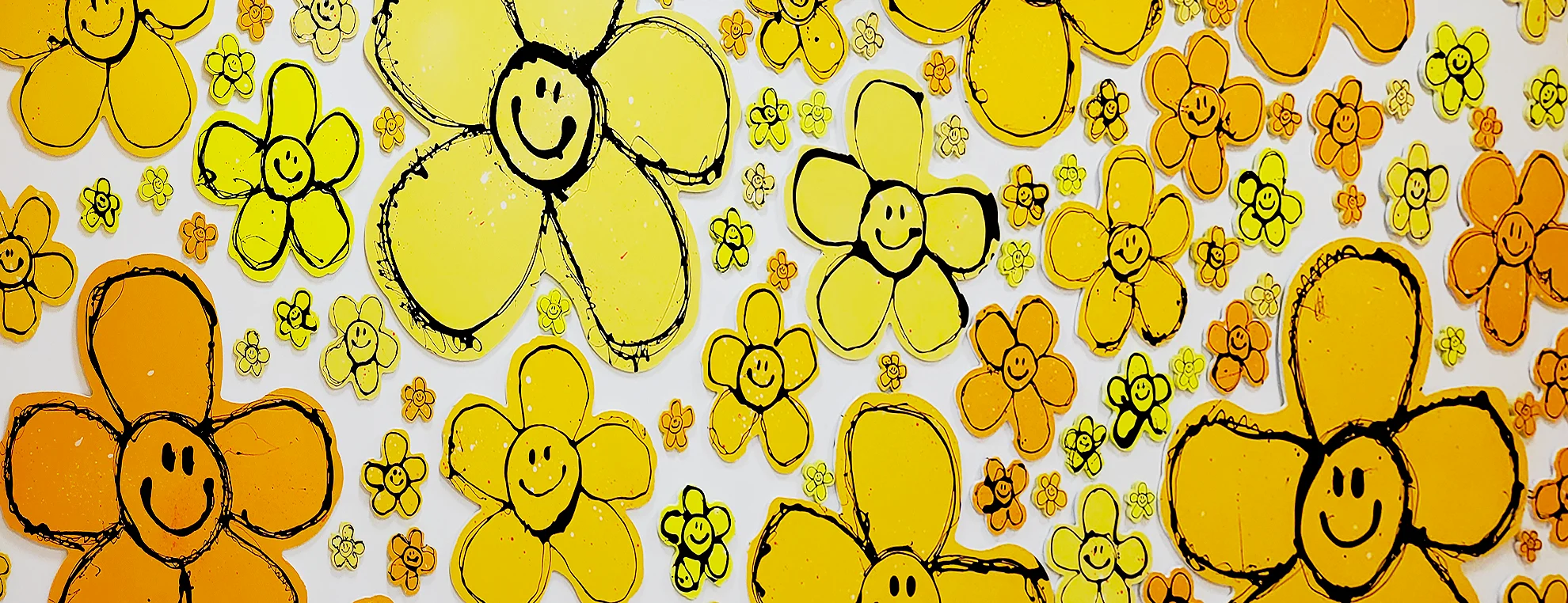
It also echoed something I noticed more recently when visiting the FLOWERS – FLORA IN CONTEMPORARY ART & CULTURE exhibition, where artists from very different backgrounds were brought together under one roof. (link here to your Flowers article)
There was something undeniably valuable about seeing such a wide range of work in one place. Artists whose work usually exists in different cities, on different continents, brought together under one roof.
It allowed for comparison. For context.
What happens when something becomes accepted
But it also raised a question.
Street art began as something subversive. It existed outside systems. It challenged ideas of ownership, space and visibility.
It wasn’t always meant to be preserved.
When something like that becomes widely accepted, and eventually celebrated within institutions like the Saatchi Gallery, it inevitably changes.
What was once seen as disruptive becomes familiar.
What was once edgy becomes part of the mainstream.
That doesn’t make the work any less interesting, but it does shift its position.
There’s a difference between encountering a piece unexpectedly on a wall in a city and viewing it within the controlled environment of a gallery. One feels immediate. The other feels considered.
That contrast is something I’ve also felt more directly in places like Leake Street Tunnel, where the work is constantly changing and never intended to last.
Both have value, but they are not the same.
Looking back
Looking back at the exhibition now, what stays with me isn’t just the scale of it or the names involved, but the contrast it highlighted.
Street art has come a long way from names scrawled across subway cars and walls.
It has evolved, expanded and, in many ways, been absorbed into the very systems it once sat outside of.
Whether that represents progress, loss, or simply change is difficult to define.
But it is impossible to ignore.