Whilst cleaning up my Google Photos library, something I had been meaning to do for months, I came across a set of images from a day out in London that stayed with me more than I realised at the time.
It was a trip I had planned with my Godmother, someone I have always shared a strong connection with through art. She is an avid enthusiast, although our tastes do not always align, particularly when it comes to street art. If anything, that difference makes the conversations more interesting. We are always on the lookout for exhibitions that might sit somewhere in the middle.
FLOWERS – FLORA IN CONTEMPORARY ART & CULTURE turned out to be exactly that.
A shared starting point
The exhibition centred around flowers, a subject my Godmother naturally gravitates toward, but what made it work was the range of artists and interpretations on show.
Spread across three floors at the Saatchi Gallery, the scale of the exhibition was larger than expected. It was not just paintings either. Sculpture, digital installations and even fashion all played a role, with pieces by Vivienne Westwood standing out in particular.
What struck me most was how differently each artist approached the same subject. Flowers, something so familiar and often simplified, became something else entirely depending on who was behind the work.
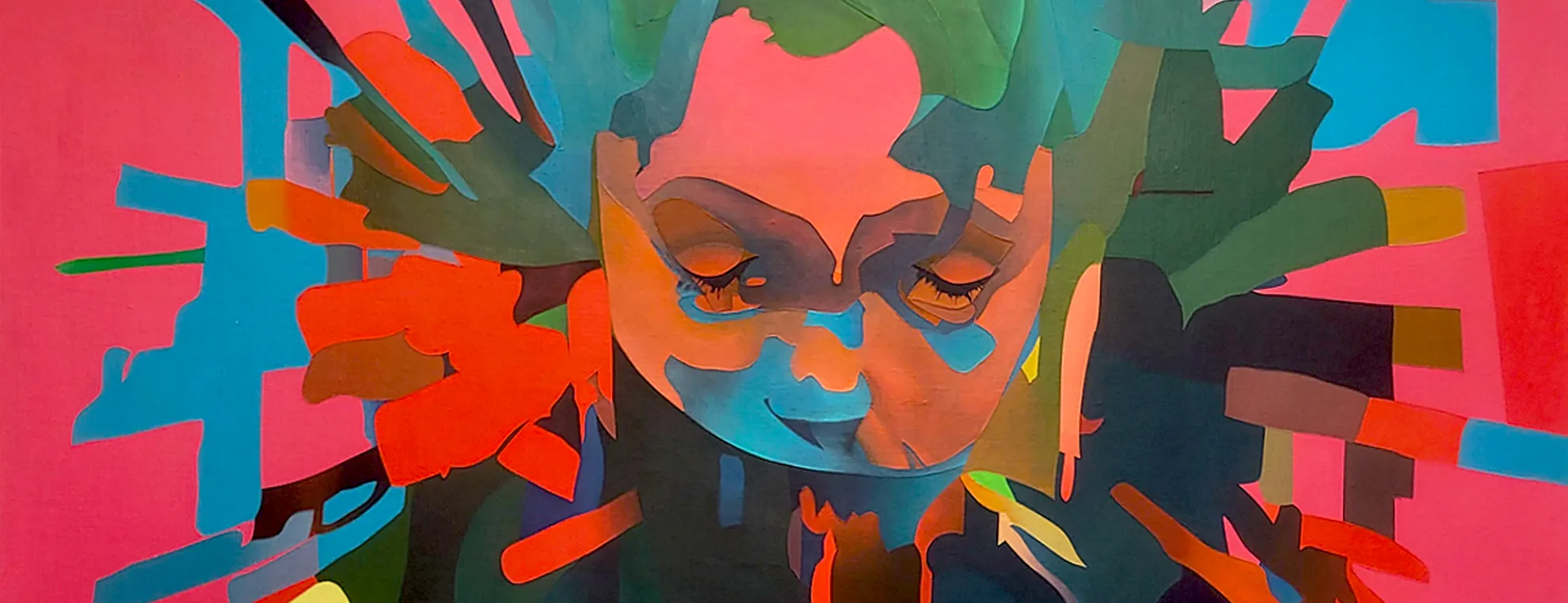
One moment that stood out was a large-scale spray-painted piece by Sophie Mess, positioned prominently by the staircase. The colour and presence of the piece made it impossible to ignore, and interestingly, it was one of the works that really resonated with my Godmother too.
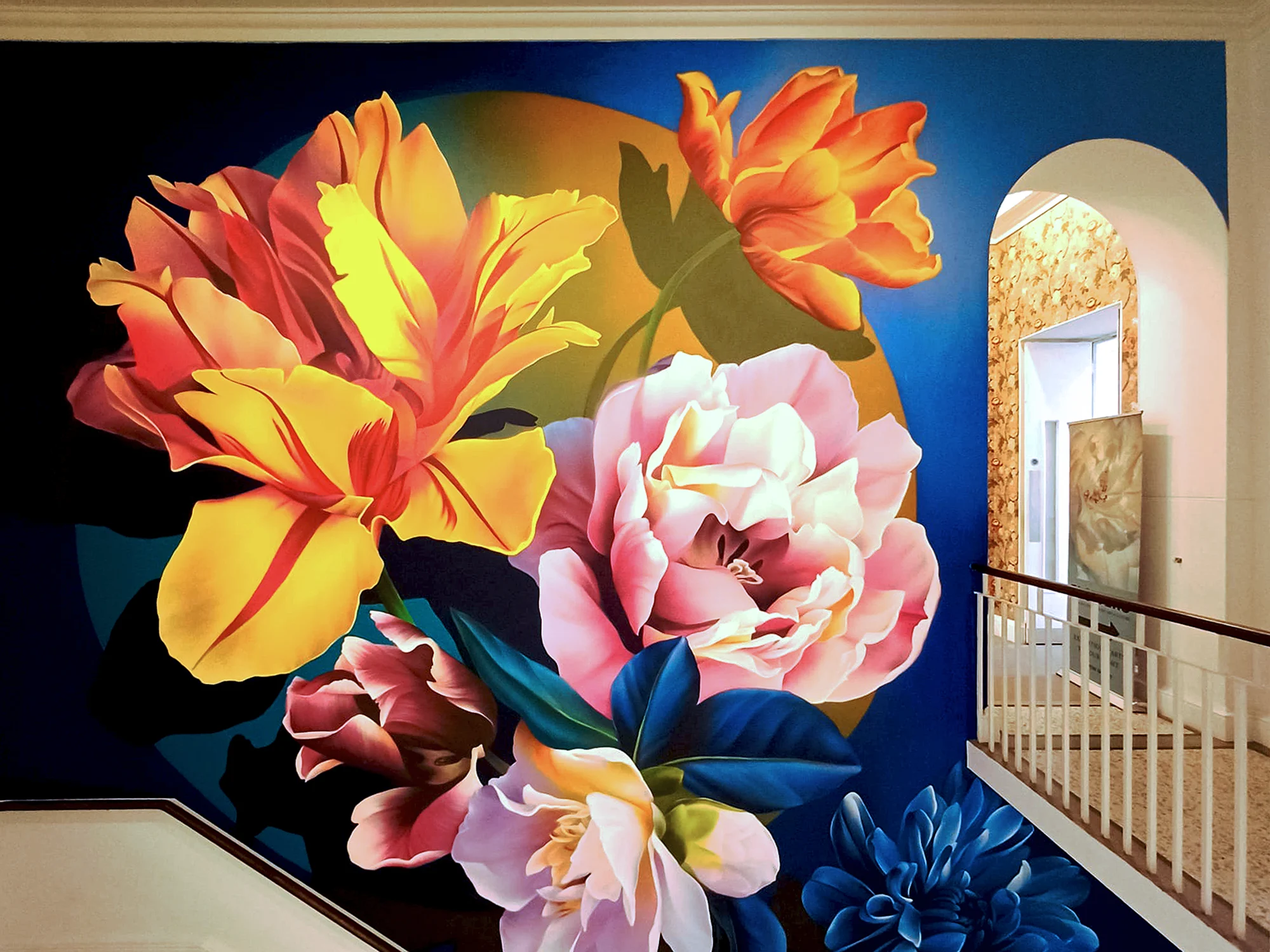
Sophie Mess, floral mural at the Saatchi Gallery
There was also something enjoyable about recognising artists within the space. Names like Heath Kane and RYCA brought small moments of familiarity within a broader, varied show.
If anything, the only surprise was who was not there. Given the theme, I found myself expecting to see work by Tim Fowler, whose focus on flora feels like a natural fit. I had visited one of his exhibitions previously, and his approach to plant life stayed with me. His absence stood out.
Overall, it was an exhibition that presented a simple subject in complex, varied and often unexpected ways.
A shift in atmosphere
After leaving the gallery and saying goodbye to my Godmother, the day took a different turn.
A short walk across the Thames led me to Leake Street Tunnel, a place that could not feel further removed from the controlled environment of a gallery.
Before even stepping inside, the smell of spray paint hits you.
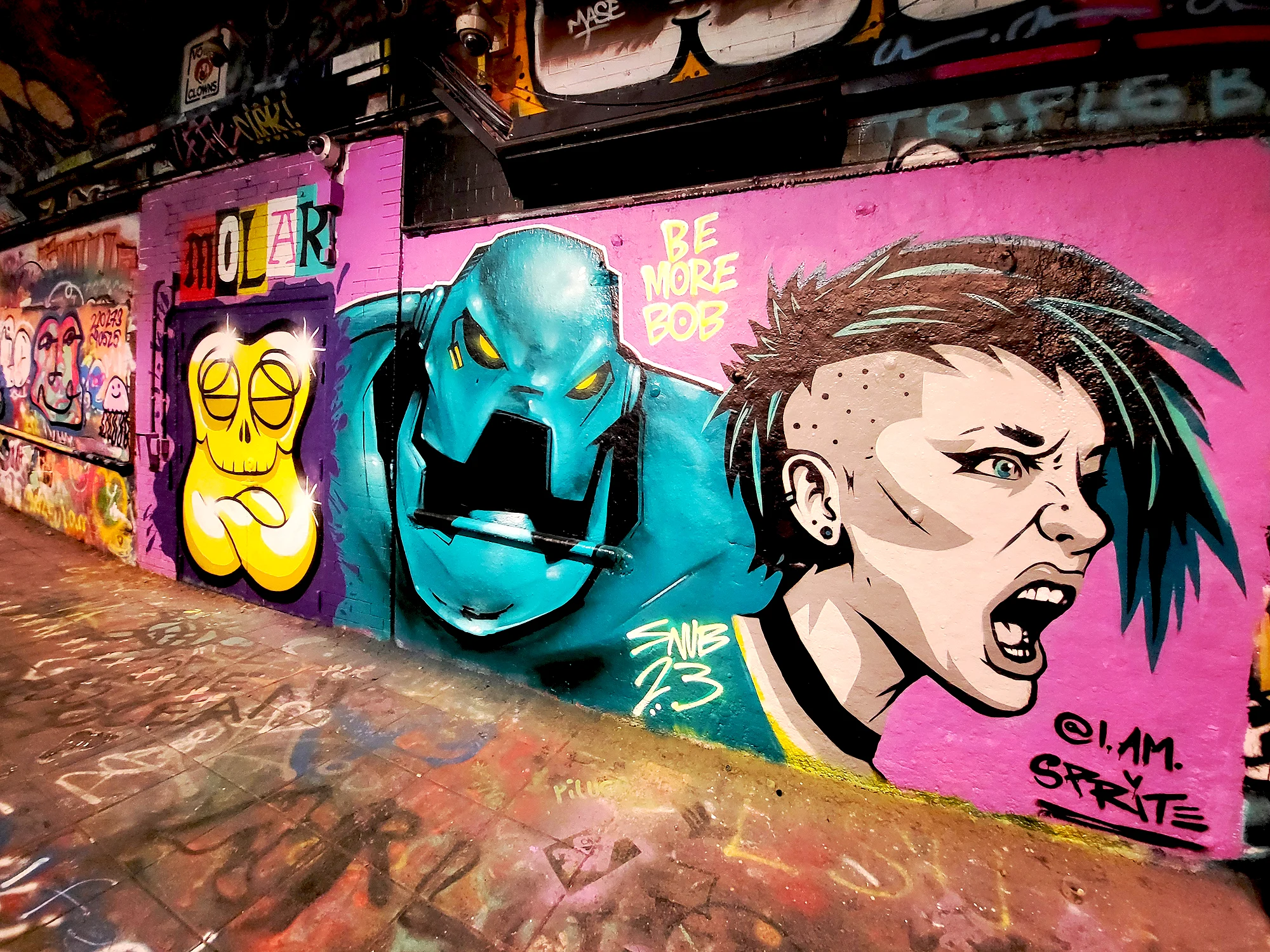
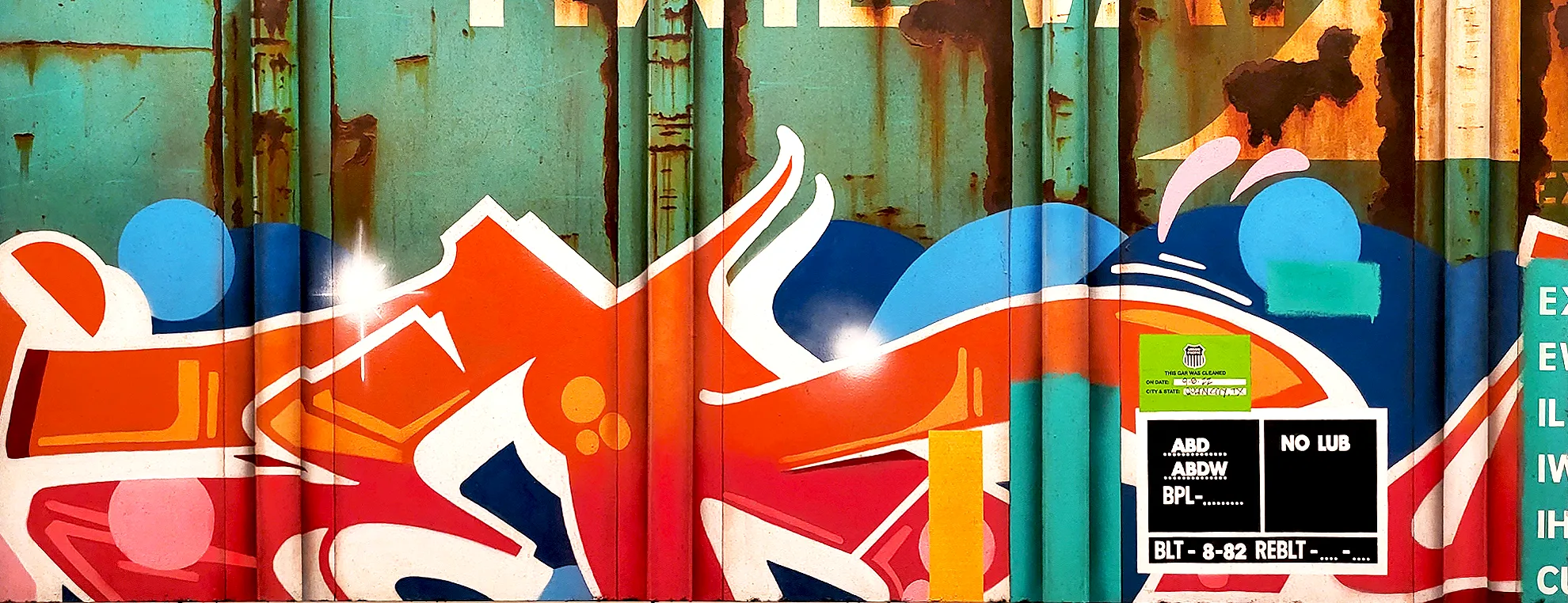
Works by Snub, I Am Sprite and Molart at Leake Street Tunnel, Waterloo
Inside, there is a constant energy. Artists are working in real time. Pieces form in front of you, while others are already being painted over. Nothing is static, and nothing is guaranteed to last.
That is part of what makes it compelling.
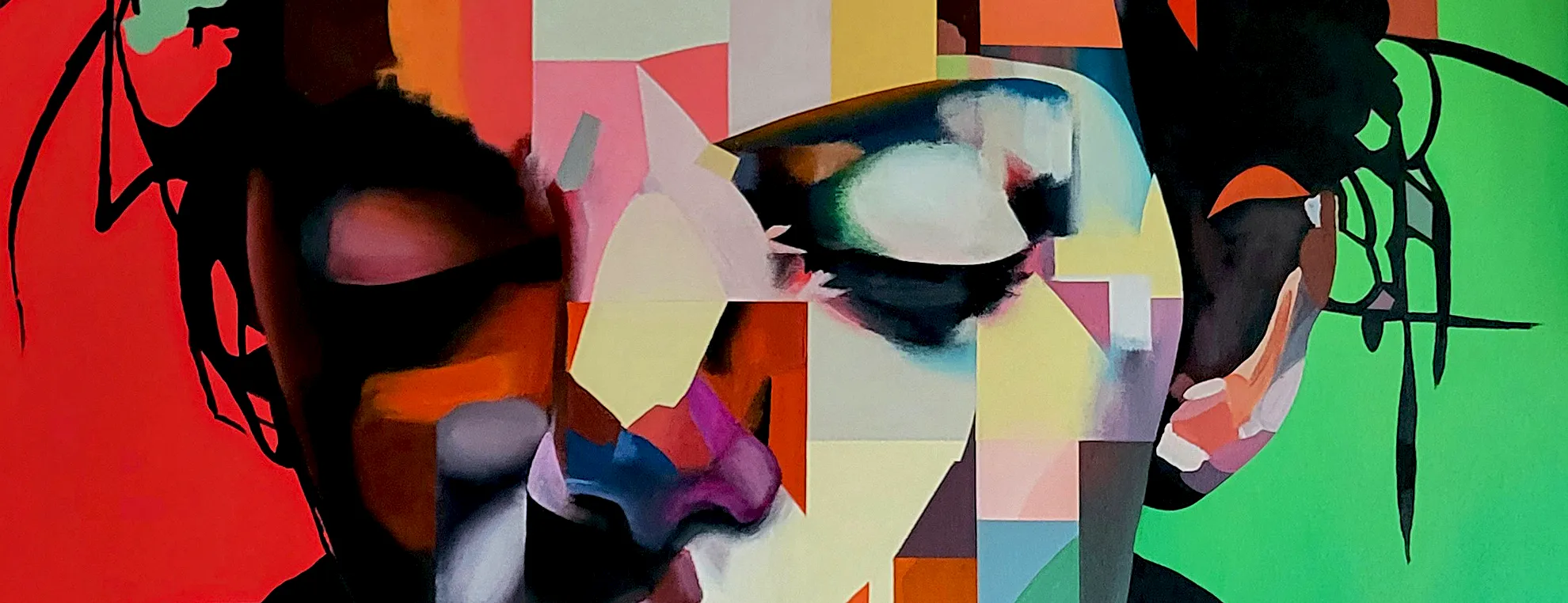
I had arranged to meet friends there, including British street artist Daniel Wilson, now based in Chicago, who was in the middle of painting a portrait. Nearby, Snub and Jenks were also working on pieces.
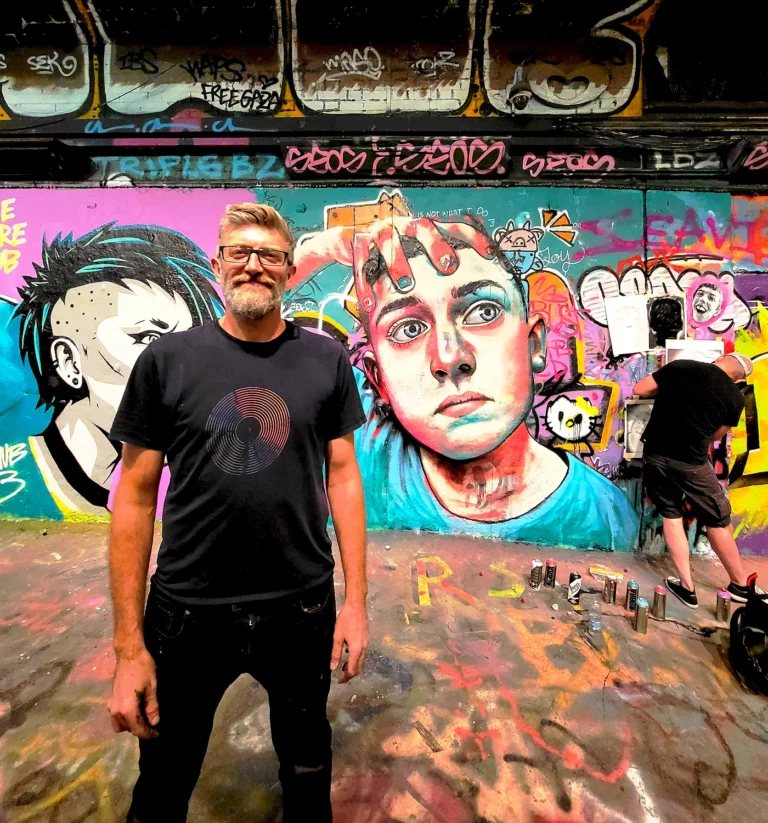
Daniel Wilson with his work at Leake Street Tunnel, Waterloo
There is something uniquely engaging about watching work come together in that environment. It is immediate, unfiltered and, in many ways, temporary.
Unlike the gallery, where everything is carefully curated and preserved, the landscape here is constantly changing. A piece might exist for hours, maybe days, before it disappears under something new.
You cannot be precious about it.
Two sides of the same contemporary art world
What stayed with me, looking back through those photos, was the contrast between the two spaces.
One is controlled, curated and considered.
The other is raw, fast-moving and unpredictable.
Both sit comfortably within the same world of contemporary art.
The gallery offers time to reflect.
The tunnel offers something closer to a pulse, something alive.
Experiencing both in the same day felt like seeing two sides of the same conversation.