A New Painting, A Continuing Dialogue
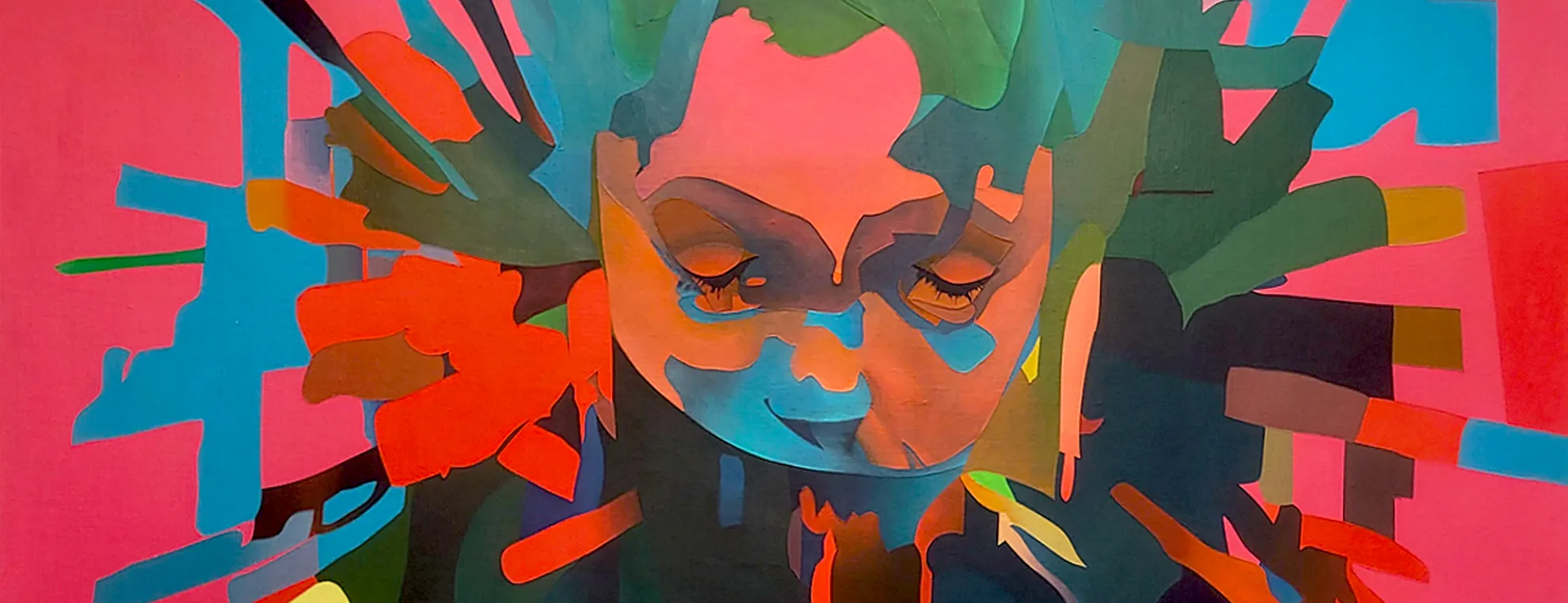
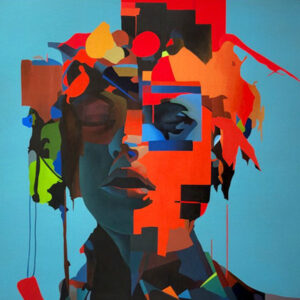
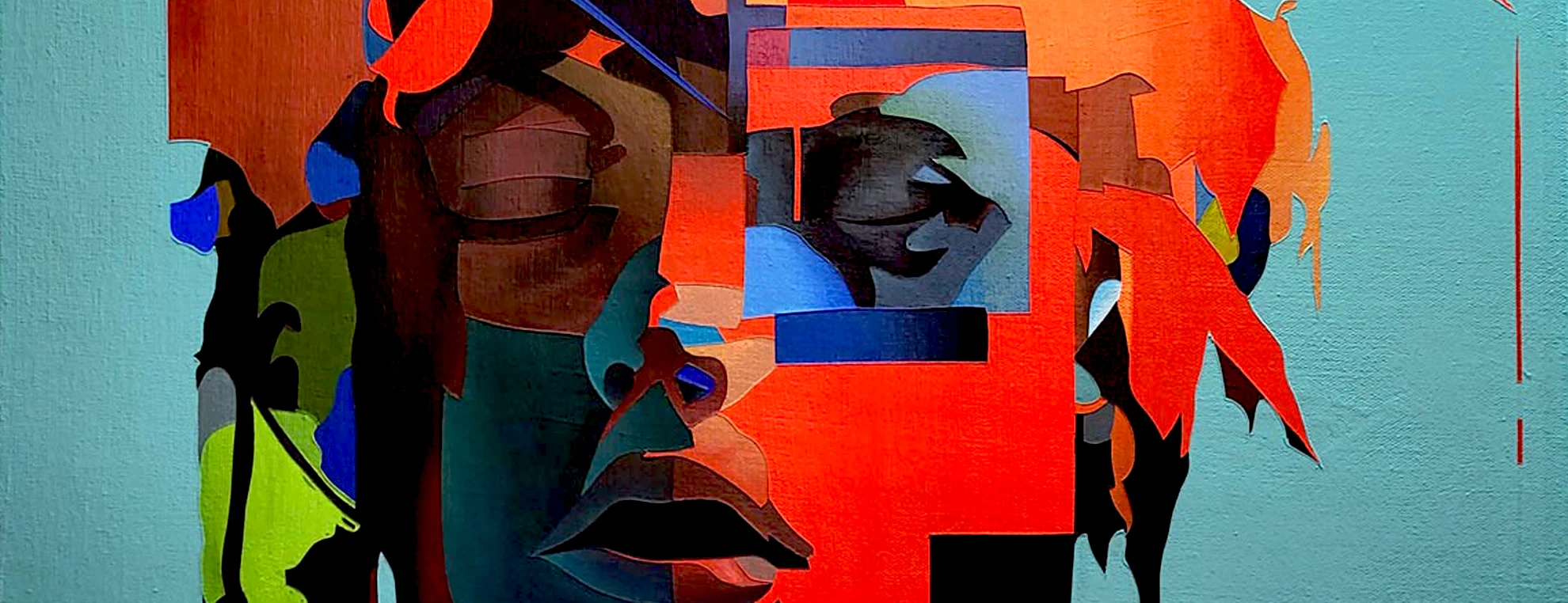
I’m pleased to share my latest painting, Brain Fog — an acrylic work that continues my exploration of internal pressure and the experience of navigating modern life.
As with my previous pieces, it combines sharp geometric forms with vivid colour contrasts to reflect internal states. This time, though, the focus pushes further into fragmentation — not just the sense of overload, but the disjointed version of ourselves that can emerge when everything feels too much.
Much of my work revolves around that inner space — the thoughts, emotions, and pressures that aren’t always visible, but are constantly present. Brain Fog is an attempt to give that experience form, holding it still long enough to be examined (link “Brain Fog” → product page).
Behind the Technique
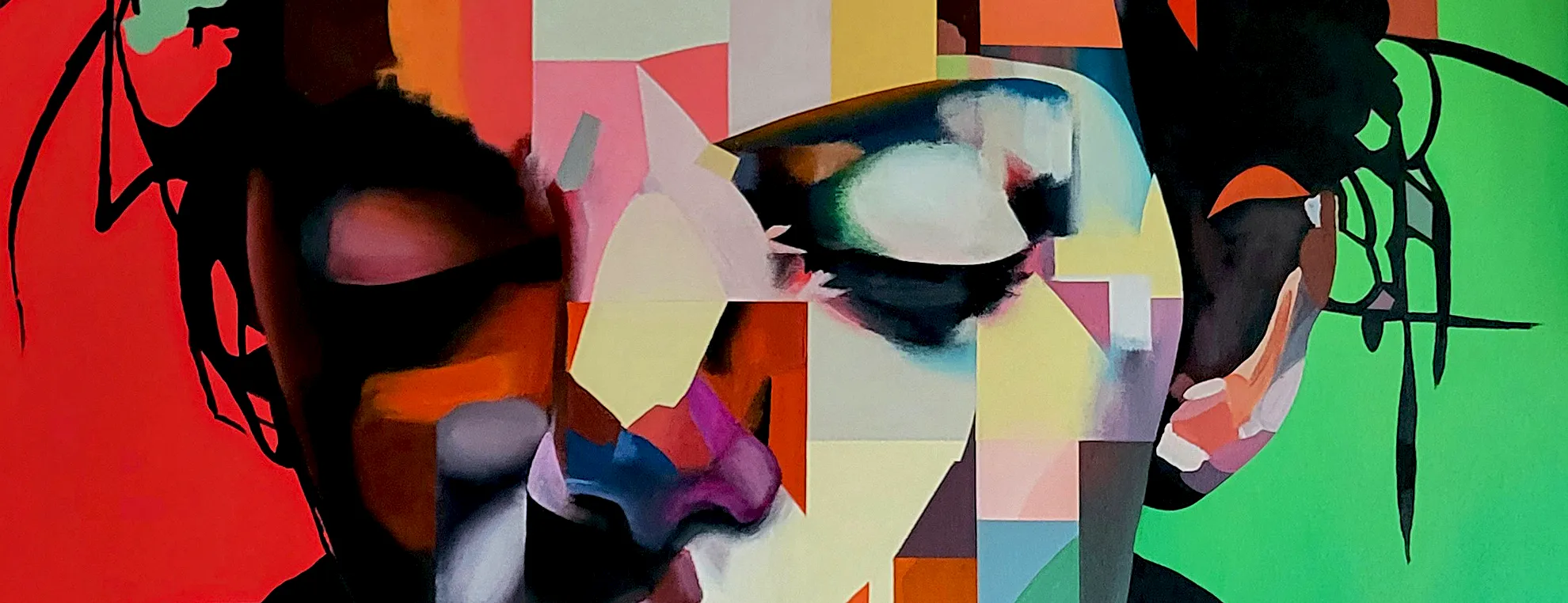
A defining feature of the painting is the precision of its structure.
Each section is carefully masked using frog tape, allowing the composition to be built gradually, layer by layer. It’s a slow, deliberate process — one that mirrors the way we often try to organise our thoughts when everything feels scattered.
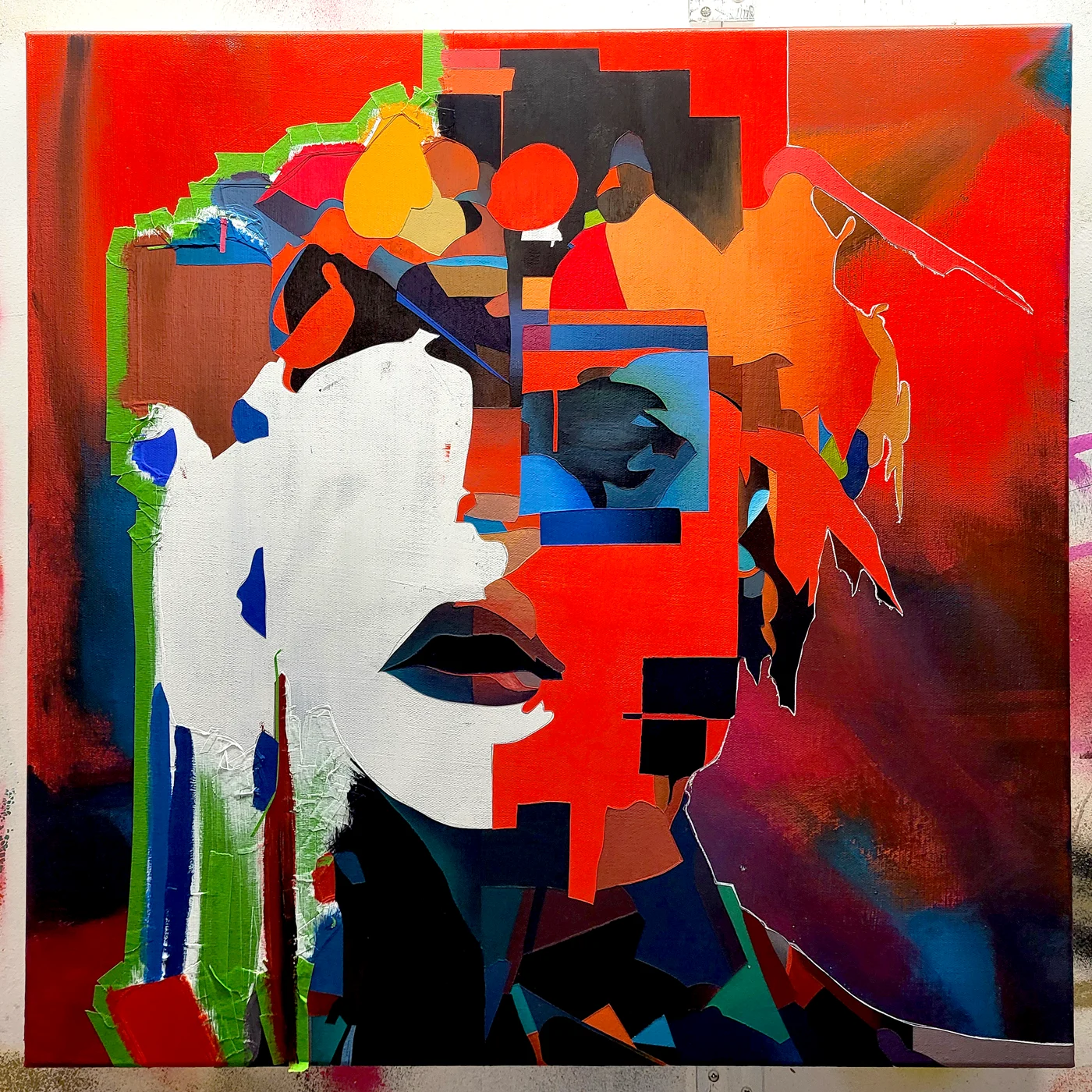
Masking and layering play a key role in building the structure of the painting
There’s a contrast built into that approach. The shapes and colours suggest unpredictability, while the clean edges impose a sense of control. That tension — between chaos and order — sits at the centre of the work.
The Fragmented Self
At a glance, Brain Fog reads as a portrait.
But it resists clarity.
Facial elements are suggested rather than defined. The image is broken into sections that don’t fully resolve, leaving space for interpretation. It isn’t about representing a specific person, but about capturing a state — something familiar, but difficult to articulate.
The figure becomes a kind of stand-in. A way of visualising what it feels like when focus slips, when thoughts scatter, or when emotional pressure builds without a clear outlet.
Colour as Language
Colour plays a central role in that.
The turquoise background sits somewhere between calm and unease, depending on how you read it. Over that, blocks of red, orange, cobalt blue and green push forward, creating friction within the image.
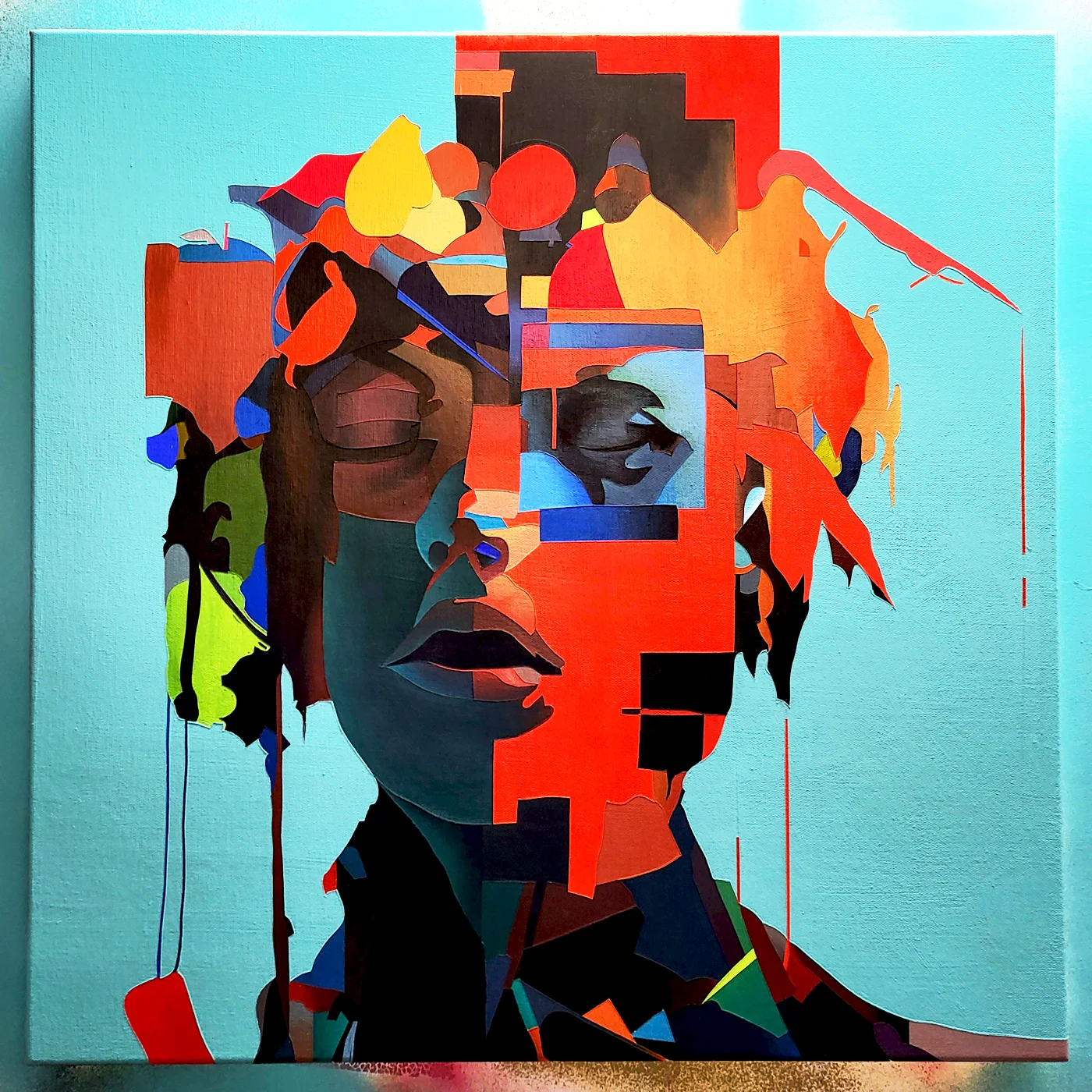
Colour and structure combine to reflect the tension between clarity and overwhelm
It’s less about harmony and more about interaction — colours working against each other as much as they work together.
Living With Constant Input
The painting also reflects something broader.
We’re surrounded by constant input — notifications, information, expectation. There’s very little space to process any of it fully. Over time, that builds into something quieter but persistent.
A kind of background noise.
Brain Fog sits in that space. Not as a direct statement, but as a visual response to that ongoing pressure.
Why Abstract Portraiture Works
For me, abstract portraiture allows these ideas to be explored without becoming literal.
By stepping away from realism, the work opens up. It becomes less about recognition and more about experience. Viewers can project their own thoughts onto the image, finding something that resonates without being told exactly what to see.
That approach runs through much of what I do, particularly in how the work develops over time and across different pieces within my broader body of work.
The Role of Process
The process itself plays a part in all of this.
Masking, painting, removing, repeating — there’s a rhythm to it. Something slower and more deliberate than the pace of everyday life.
It creates space to think, or sometimes not think at all.
That balance between control and release carries through into the final image.
Holding Space for Interpretation
Brain Fog isn’t intended to provide answers. It’s simply a way of holding something still long enough to look at it.
Whether that connects on a personal level, or simply as an image, is up to the viewer. But if it creates even a brief moment of recognition, then it’s done what it needs to do.
That same moment sits within the painting itself — something to return to, to look at differently each time (link “the painting itself” → Brain Fog product page).