On abstraction, emotion and the strange power of the human face
There are countless subjects an artist can paint.
Landscapes.
Still life.
Pure abstraction.
And yet, throughout the history of painting, artists have repeatedly returned to the same subject: the human face.
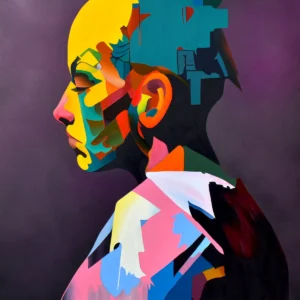
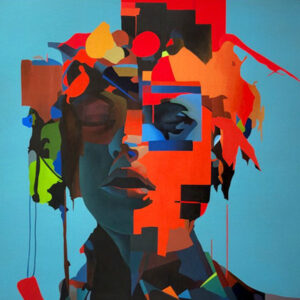
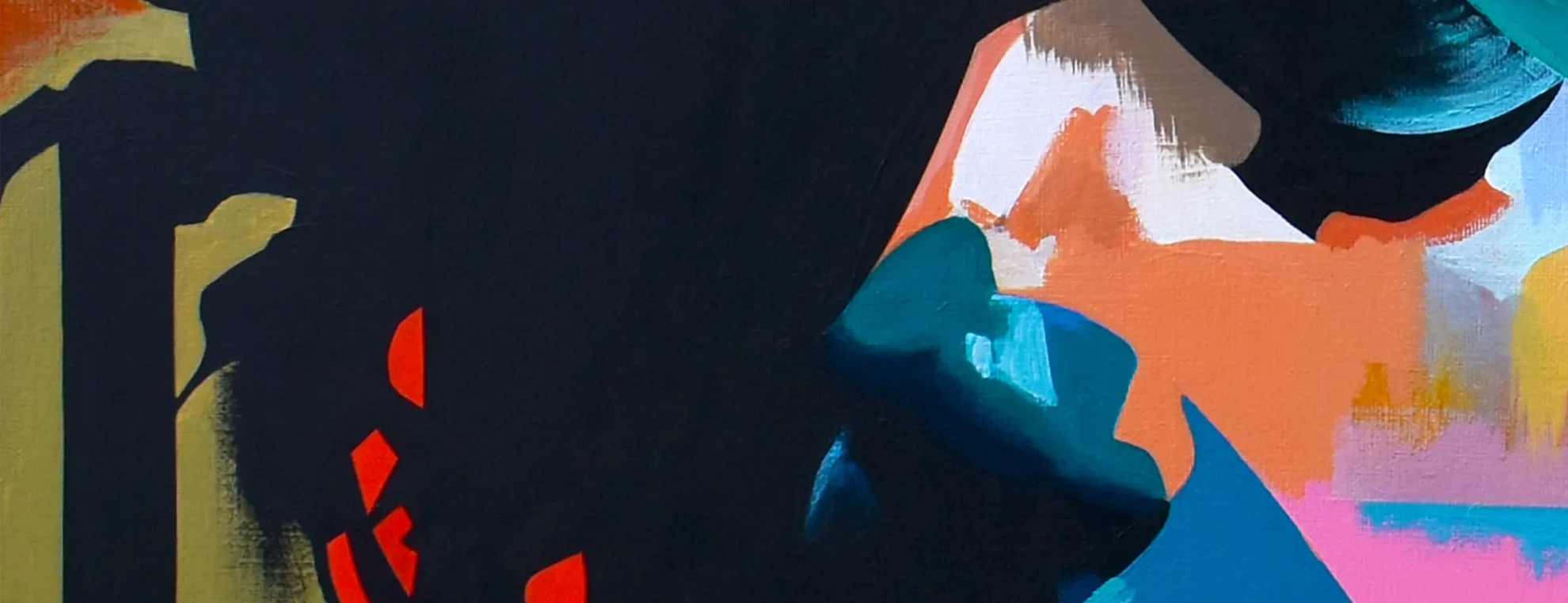
This idea sits at the centre of my abstract portrait painting.
For me, the face has always held a strange kind of power. Even when reduced to its simplest elements — a few shapes, lines or areas of colour — it still carries an emotional presence that other forms rarely achieve.
This is one of the reasons my work has evolved towards my abstract portrait work. The moment a painting begins to hint at a face, something shifts.
It’s no longer just an arrangement of shapes and colour.
It becomes something human.
The Face Is the Most Recognisable Shape We Know
Humans are wired to recognise faces.
Psychologists often refer to pareidolia — our tendency to see faces in clouds, shadows or everyday objects. Two dots and a line can be enough for the brain to interpret a face.
That idea fascinates me as a painter.
It means a portrait doesn’t need to be realistic to feel alive. A face can emerge from abstraction — sometimes barely there — and still be recognised instantly.
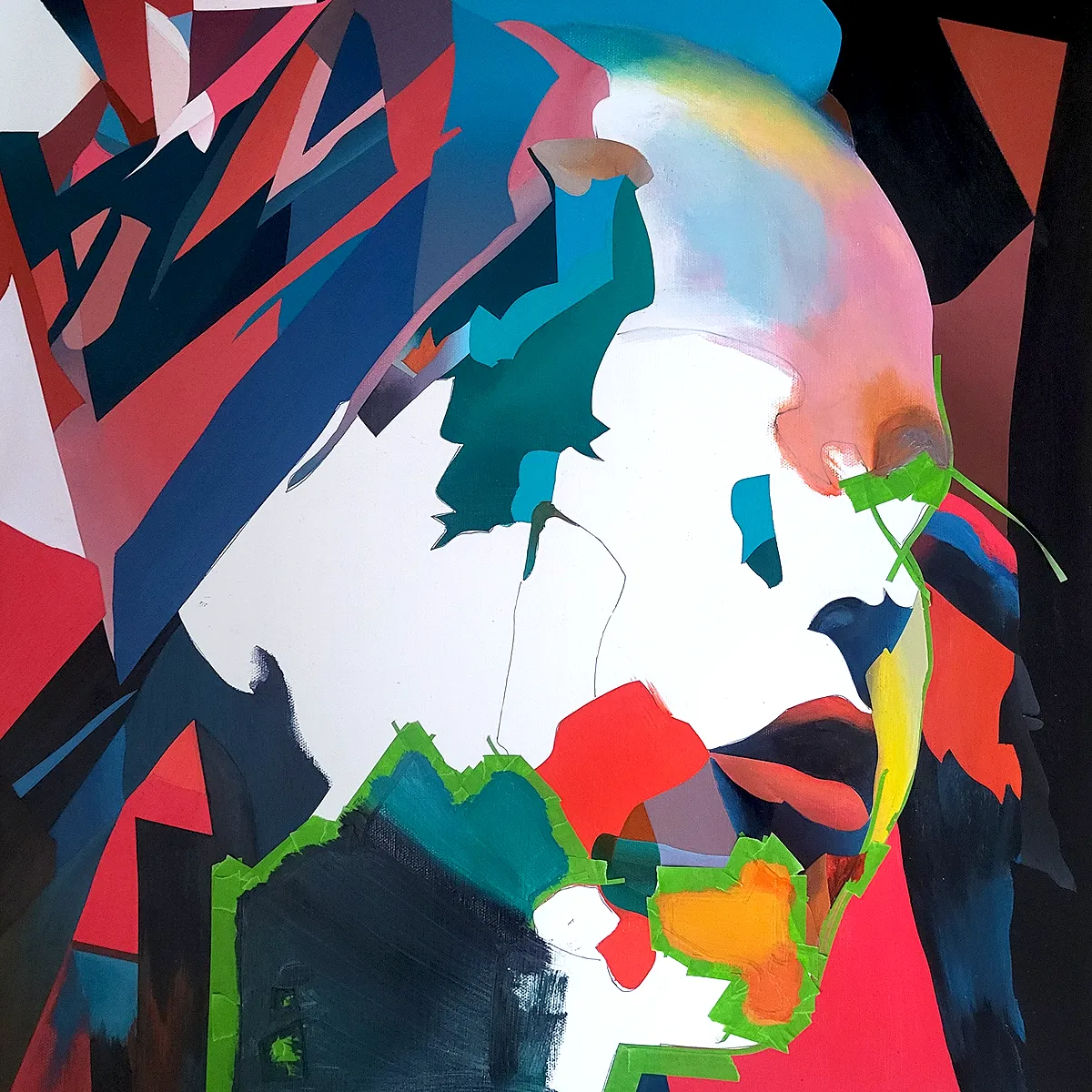
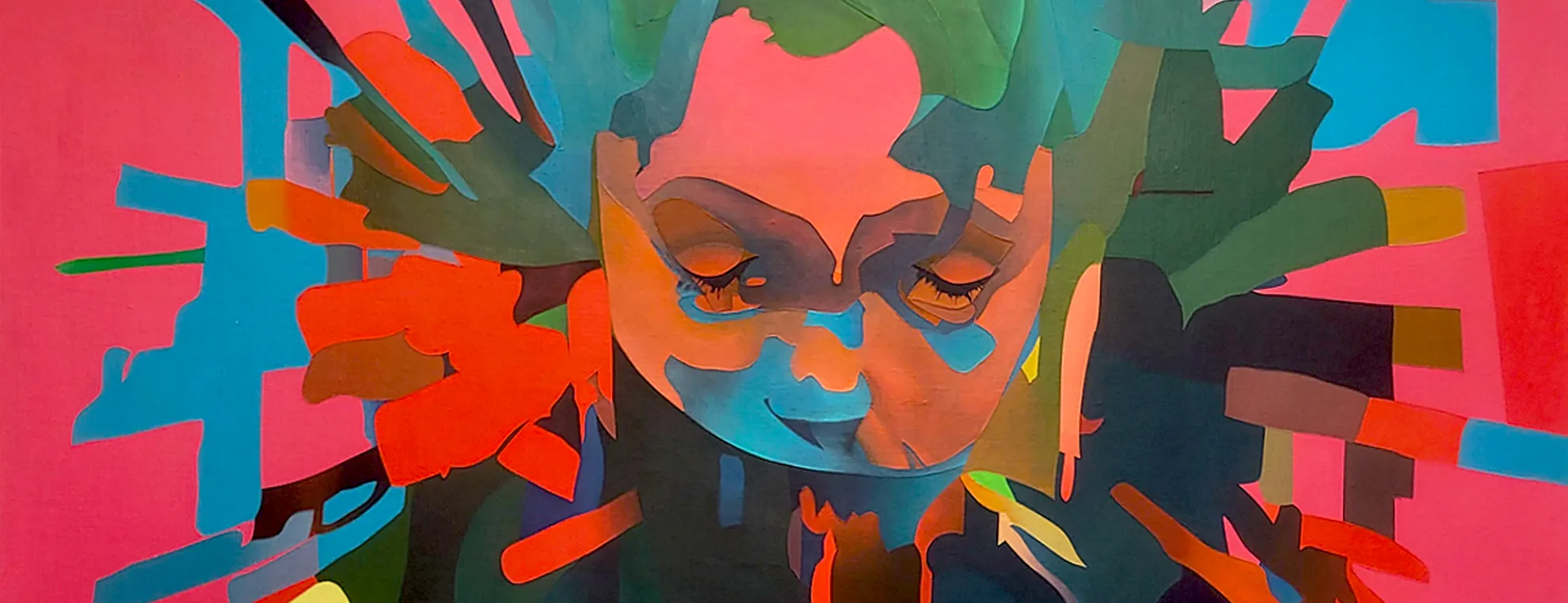
A face beginning to emerge through structure and colour
This is where abstract portraiture becomes particularly interesting.
The painting sits between representation and ambiguity. The viewer understands they’re looking at a face, but the meaning of that face remains open.
It becomes less about likeness, and more about feeling.
Why I Strip the Face Back
In traditional portraiture, the goal is often likeness — capturing the exact features of a subject.
That isn’t what I’m aiming for.
Instead, I’m interested in reducing the face to its essentials: shape, colour, structure and balance.
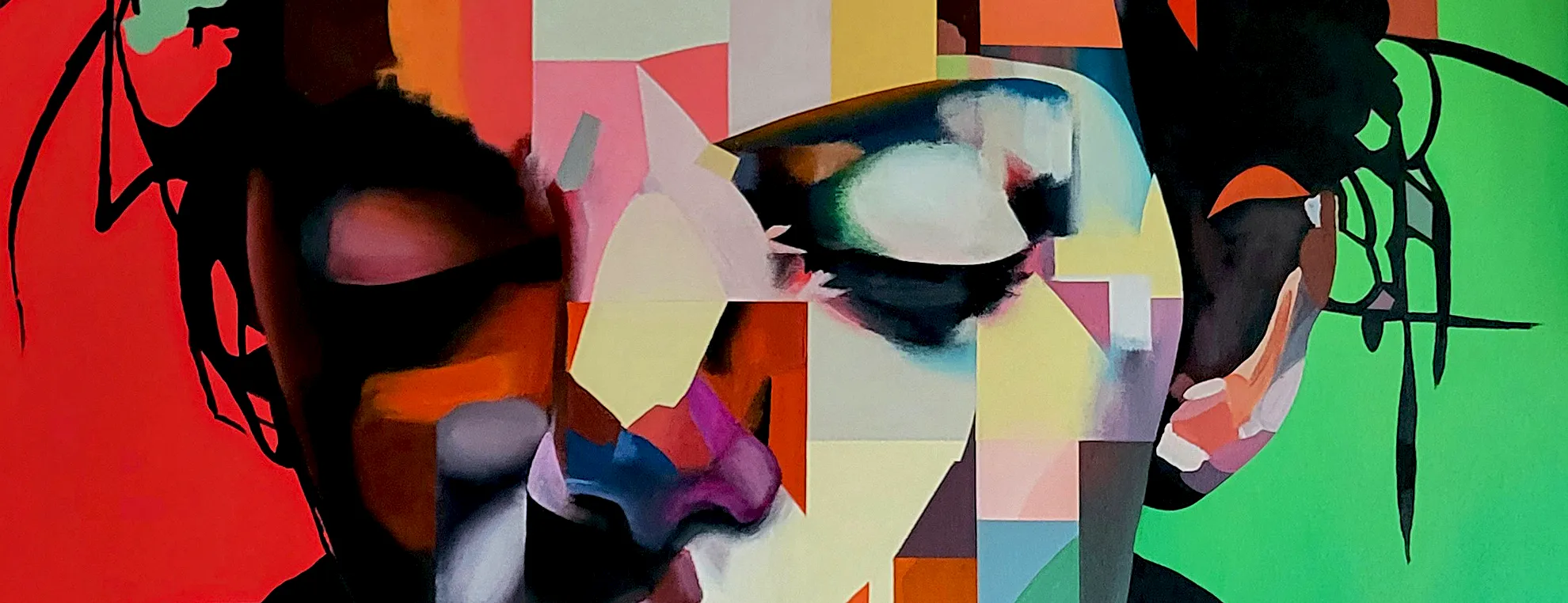
Most of my abstract portrait paintings begin with a structured framework. Using masking tape, I divide the canvas into sections and build the image layer by layer. The process is slow, deliberate and almost architectural.
At first glance, that structure can feel rigid.
But it creates the conditions for something more emotional to emerge.
The sharp lines introduce control.
The colour introduces unpredictability.
And somewhere between those two, the face begins to appear.
When a Face Becomes Emotional Rather Than Literal
Abstract portrait painting allows a shift away from literal representation.
A realistic portrait tells you exactly what you’re looking at.
An abstract portrait invites interpretation.
A slight imbalance in shape can introduce tension.
A contrast in colour can suggest unease.
A calmer area might hint at resilience.
These relationships are where the painting really lives.
Often, a piece will go through multiple revisions — sections masked, repainted, adjusted again — until something begins to settle. It’s rarely immediate. More often, it’s a gradual process of refining balance.
The Moment a Painting Begins to Feel Alive
There’s usually a point where the painting shifts.
Up until then, it can feel like separate parts — shapes, colours, sections still negotiating their place.
Then something changes.
The elements begin to relate.
The composition settles.
The face holds presence.
It’s difficult to explain exactly when it happens, but when it does, the painting stops feeling constructed and starts feeling alive.
For me, that moment sits right at the balance point between structure and emotion.
Still Standing
A good example of this is my 30cm × 30cm abstract portrait painting, Still Standing.
Although smaller in scale, the intention remains the same. The composition is built gradually, with sections repeatedly masked and refined until the face begins to emerge.
The title reflects something many of us recognise.
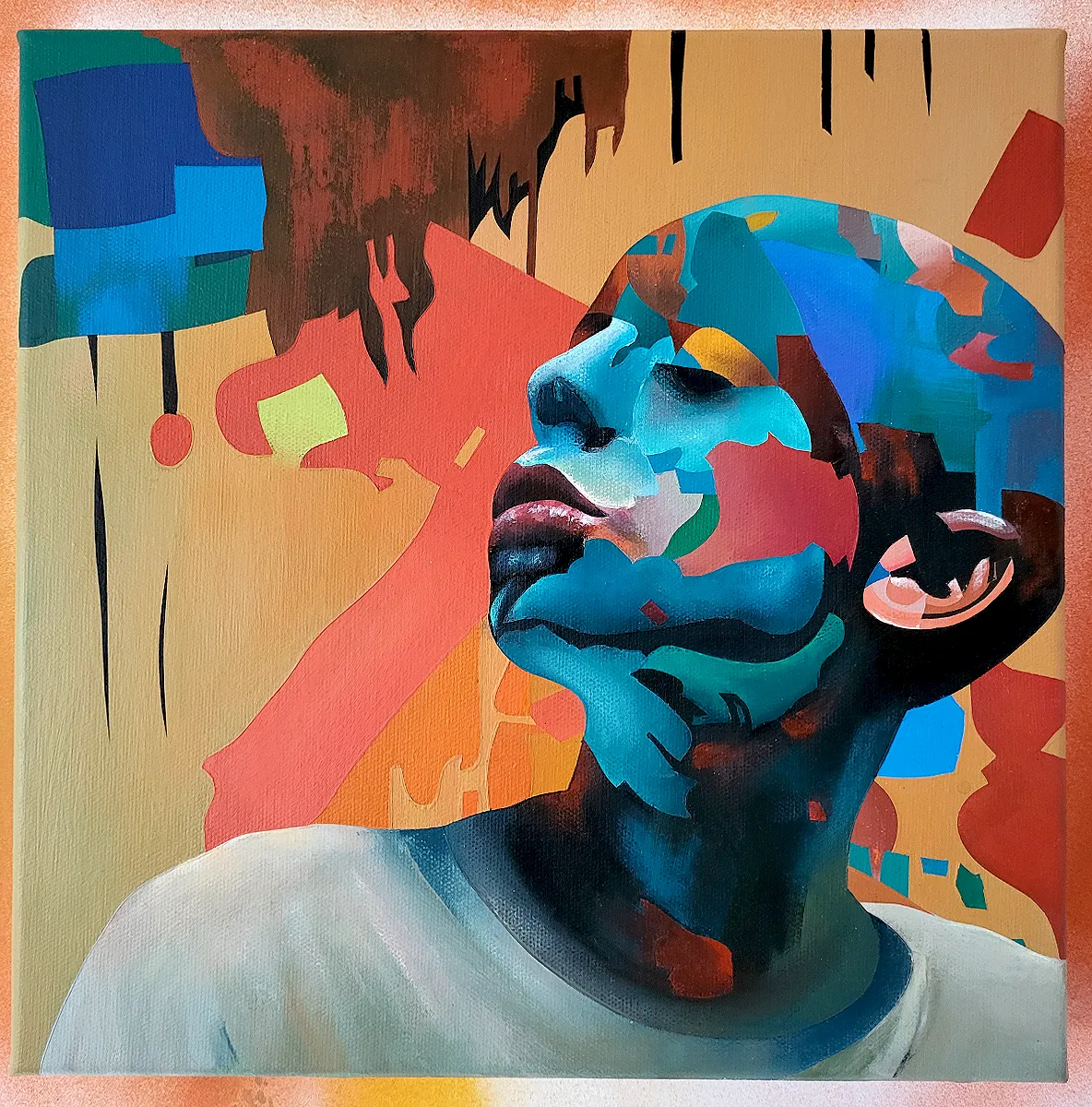
Still Standing — an abstract portrait exploring quiet resilience through structure and balance
Life can feel unstable.
Things shift.
Uncertainty appears without warning.
And yet, somehow, we continue.
We remain standing.
The figure in the painting isn’t a specific person. It reflects something more universal — a quiet resilience that often goes unnoticed.
If you’re curious to see how that balance plays out visually, you can view Still Standing alongside other recent pieces in my current collection.
Why Artists Return to the Face Again and Again
The longer I paint, the more I understand why the human face remains such a powerful subject.
It carries identity, emotion and presence all at once.
Even when abstracted, it still draws the viewer in. It creates an immediate connection — something instinctive rather than intellectual.
That’s likely why artists have returned to it for centuries.
And why it continues to appear in my own work.
Not as literal portraits, but as emotional structures emerging through abstraction.
A Continuing Exploration
Every painting feels like part of the same ongoing exploration.
How little information is needed for a face to exist?
How far can abstraction go before it disappears entirely?
What happens in the space between those two points?
Those questions continue to guide my work.
Each painting becomes an attempt to balance structure and emotion.
And somewhere within that balance, the face inevitably returns.
Explore the Work
If you’d like to see how these ideas translate into finished paintings, you can explore my latest work here.