People sometimes talk about success in art as though it happens suddenly.
An artist appears.
A painting gains attention.
An exhibition opens.
From the outside it can look as though something happened overnight.
But what people rarely see is the long stretch of time that came before it — the quiet hours in the studio, the late evenings spent adjusting a painting and the steady build-up of work that slowly shapes an artist’s voice.
Long before anyone notices the work, the artist has already been showing up.
The hours no one sees
Most of the life of an artist unfolds quietly.
There are long stretches of time when nothing particularly dramatic seems to be happening. No exhibitions, no announcements and no visible milestones from the outside.
Just the studio and the work itself.
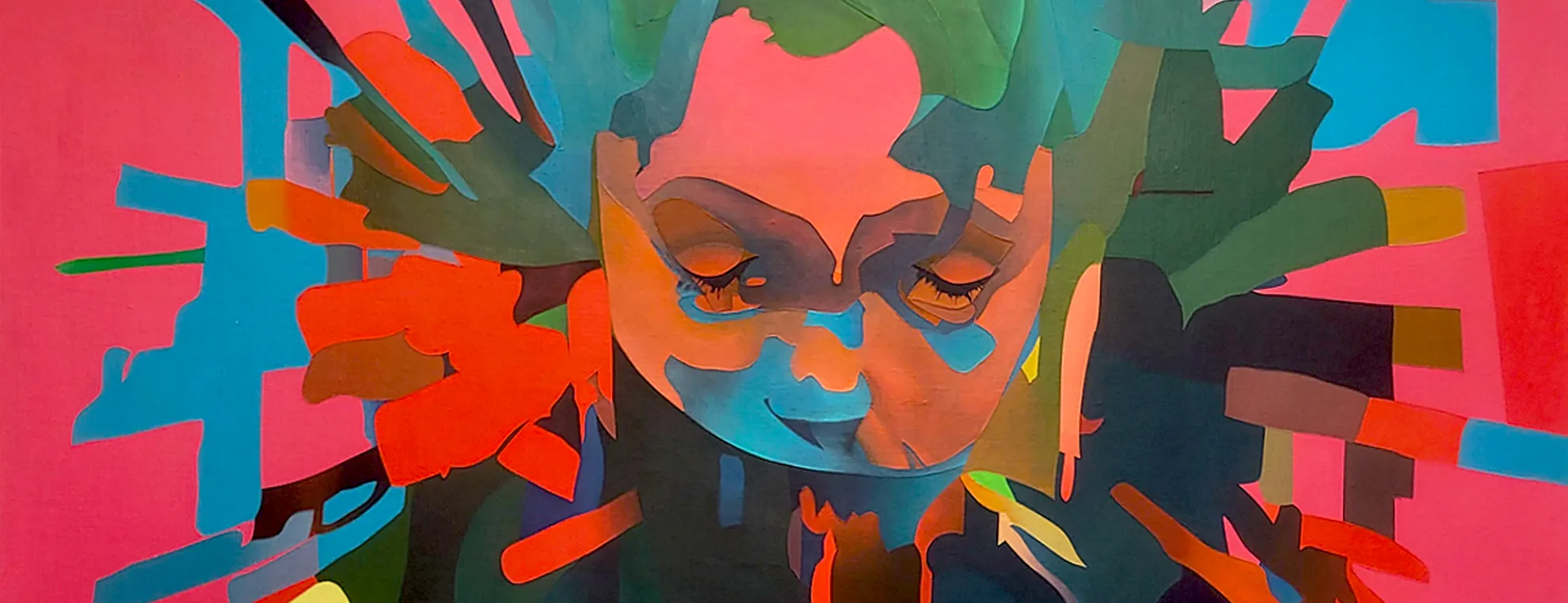
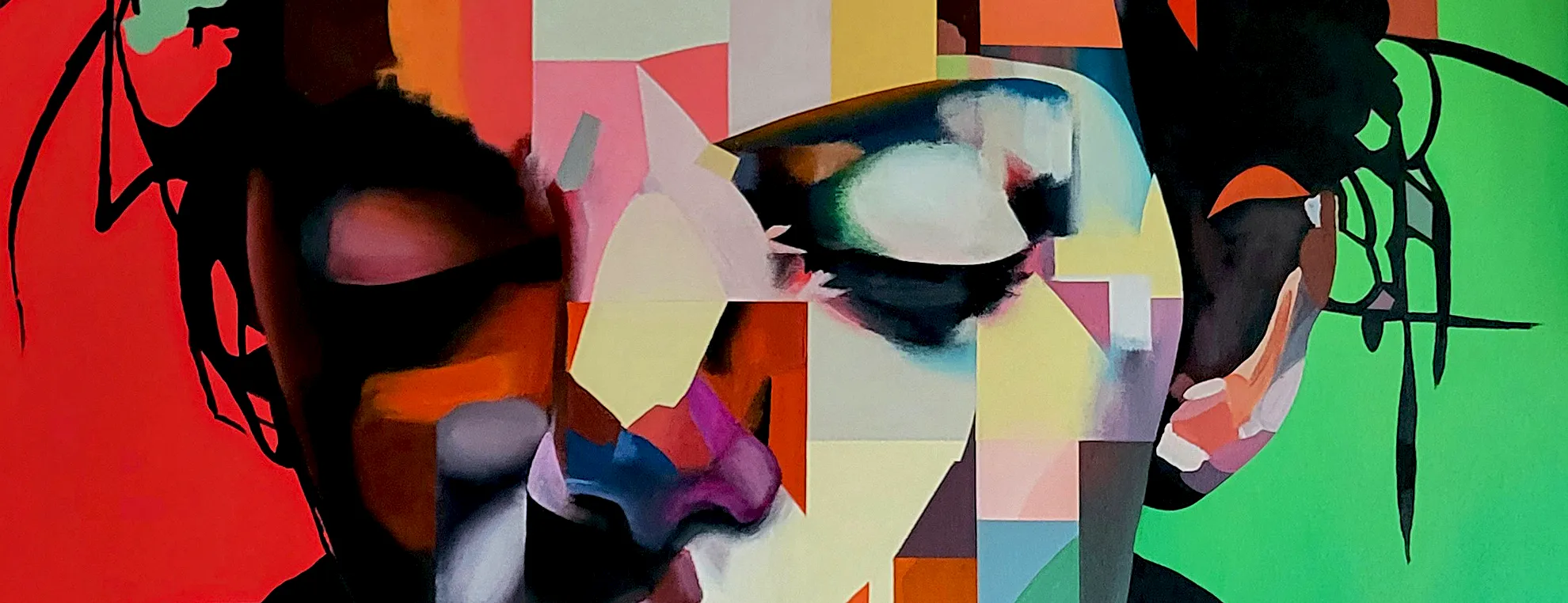
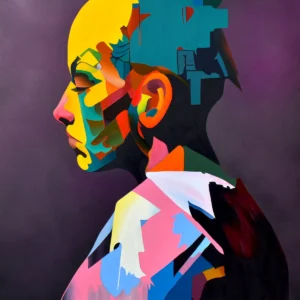
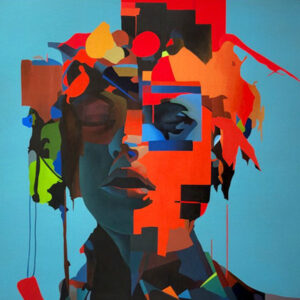
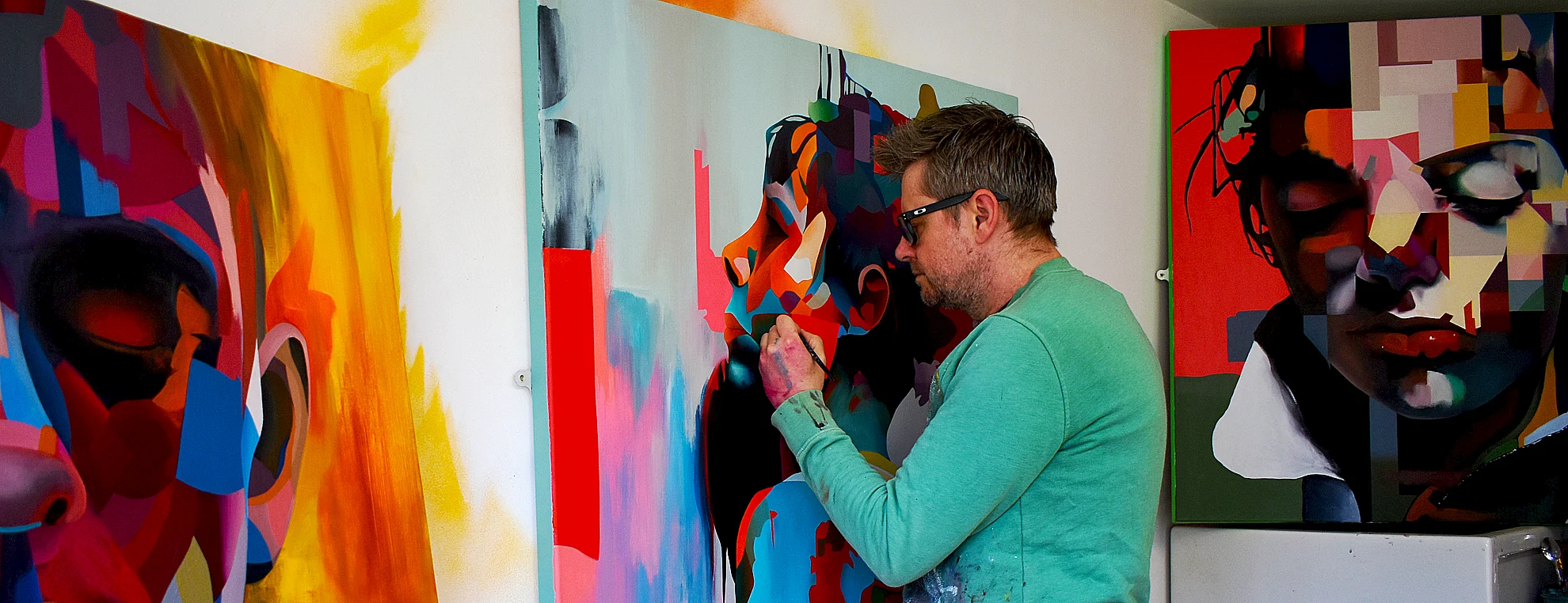
For me, that usually means standing in front of a canvas and gradually building the painting, adjusting shapes and colour until the composition begins to settle. Much of my work sits somewhere between abstraction and portraiture, and often a face only begins to reveal itself after the painting has evolved through several stages.
Sometimes that moment happens quickly.
More often it takes time.
Sections are repainted, colours shift slightly and small adjustments gradually bring the painting closer to balance. By the time the image finally feels right, many of those earlier decisions have disappeared beneath the surface.
To anyone encountering the finished painting, that process remains largely invisible.
But those hours are where the real work takes place.
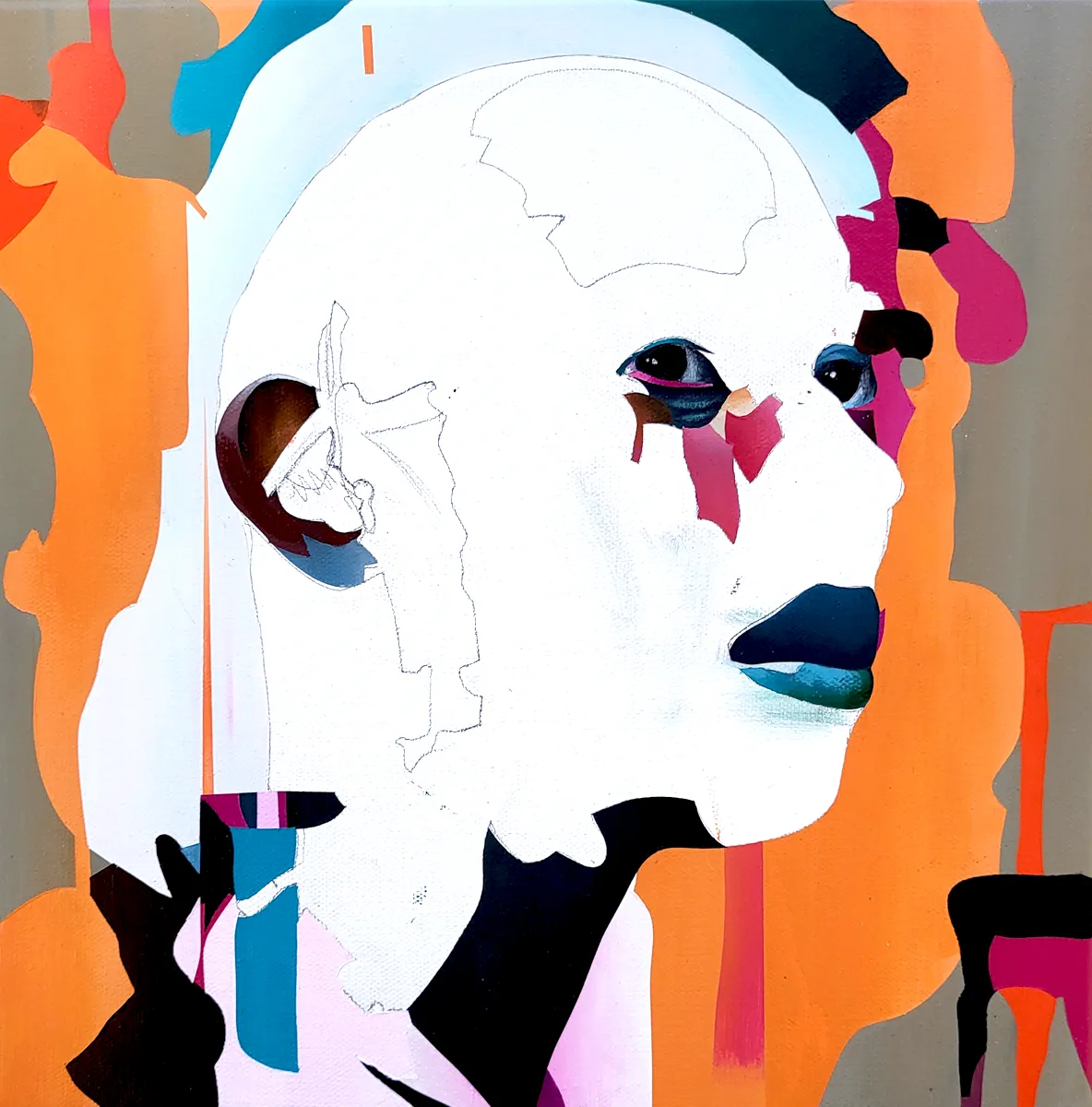
The stage where the painting is still finding its balance
Working before anyone notices
One of the realities of being an artist is that you often spend long periods working before anyone else becomes aware of the results.
You paint because you believe in the work.
You continue because something inside you tells you it matters.
That belief becomes especially important during the quieter periods, when recognition hasn’t arrived yet and the road ahead isn’t entirely clear.
There have been many evenings when I’ve found myself back in the studio long after the rest of the day has ended, adjusting a painting that still doesn’t quite feel resolved. Not because anyone is expecting it, but because the work itself demands it.
Over time you begin to realise that progress in art rarely arrives suddenly. More often it happens slowly, through the simple act of turning up and continuing the work.
The myth of overnight success
When something eventually works — when a painting resonates with people or an opportunity appears — it can sometimes look like a sudden breakthrough.
But those moments rarely appear out of nowhere.
What people are seeing is often the visible result of years spent developing the work beforehand. Years of experimenting, refining ideas and learning from paintings that didn’t quite succeed.
The pieces that eventually resonate are almost always built on top of many others that came before them.
Paintings that taught you something.
Paintings that pushed you forward, even if they didn’t quite reach the destination you hoped for at the time.
The discipline of continuing
Alongside the work itself, another quality begins to develop.
Discipline.
Not the dramatic kind people sometimes imagine, but a quieter version — the discipline of simply continuing.
Continuing when things are going well.
Continuing when they are not.
Continuing even when the outcome remains uncertain.
A friend once said something to me that has stayed in my mind ever since:
“Luck needs to see you working.”
At first it sounded like a throwaway remark, but the more I thought about it the more it rang true.
Opportunities tend to appear when you are already moving forward, when the work is already happening.
Not when you are waiting for them.
Returning to the studio
For me, that movement forward usually leads back to the same place: the studio and the process of building another painting.
Much of my work revolves around creating abstract portrait paintings, gradually constructing an image until structure and colour begin to hold together and the suggestion of a face starts to appear.
Some paintings resolve themselves quickly.
Others take longer.
But the rhythm of the process remains the same — returning to the canvas, working through the composition and trusting that something meaningful will eventually emerge.
The work before the moment
When someone encounters a painting that resonates with them, they usually see only the final result.
They see the image.
What they don’t see is the time that came before it — the revisions, the experiments and the hours spent slowly moving the painting closer to where it needed to be.
All of that unseen work sits quietly behind the finished piece.
And in many ways, it is that invisible effort that makes the visible moment possible.
Continuing
If there is one thing that becomes clearer over time, it is that much of being an artist comes down to continuing.
Continuing to believe in the work.
Continuing to paint.
Continuing to show up in the studio even when no one else is watching.
Because long before anyone notices the result, the work is already happening.
And in the end, that quiet persistence may be the most important part of the journey.
If you’d like to explore my latest abstract portrait paintings, you can view them on the originals page of my website.