Yesterday I took a trip to London, primarily to visit one exhibition that had been on my radar for some time — Pallium by Conor Harrington at Ben Brown Fine Arts.
Like many artists, I spend a lot of time looking at work online. We scroll, we zoom, we screenshot. But there is something irreplaceable about standing in front of a painting in real life.
Harrington is one of those artists whose work simply doesn’t translate fully through a screen.
Why Conor Harrington’s Work Resonates With Me
Conor Harrington has long been one of my favourite artists.
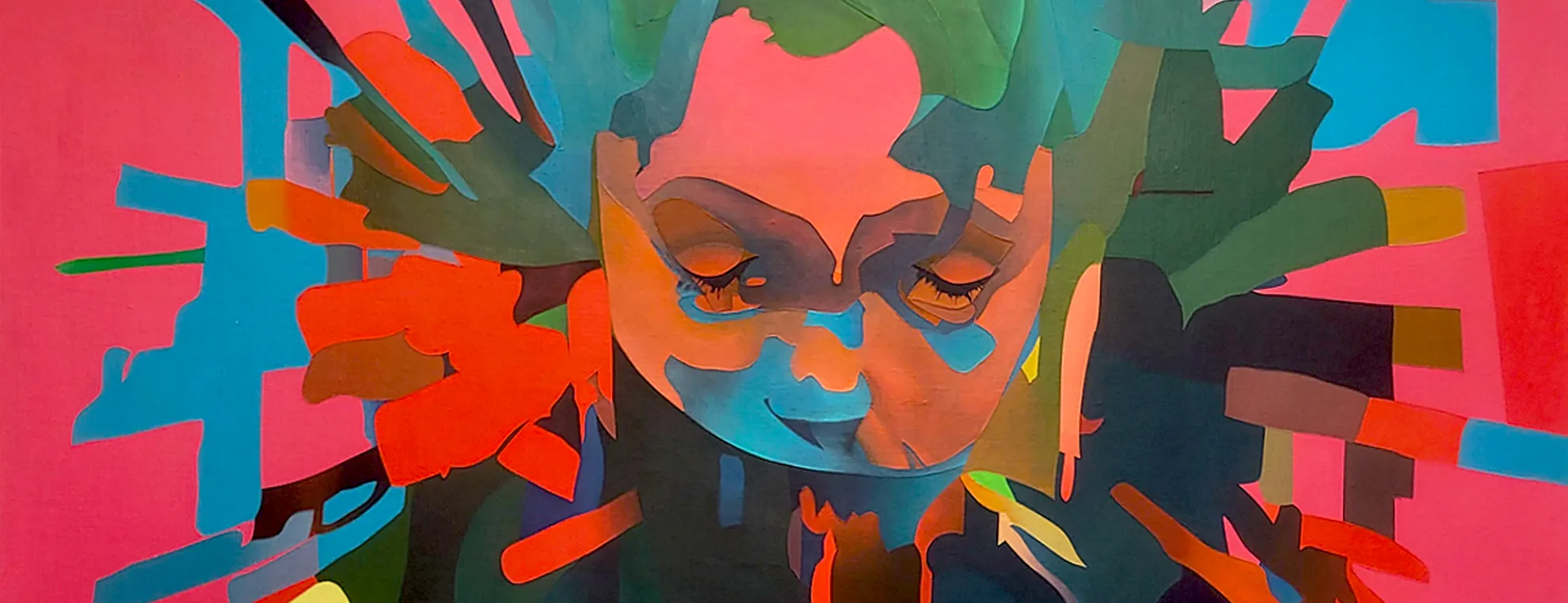
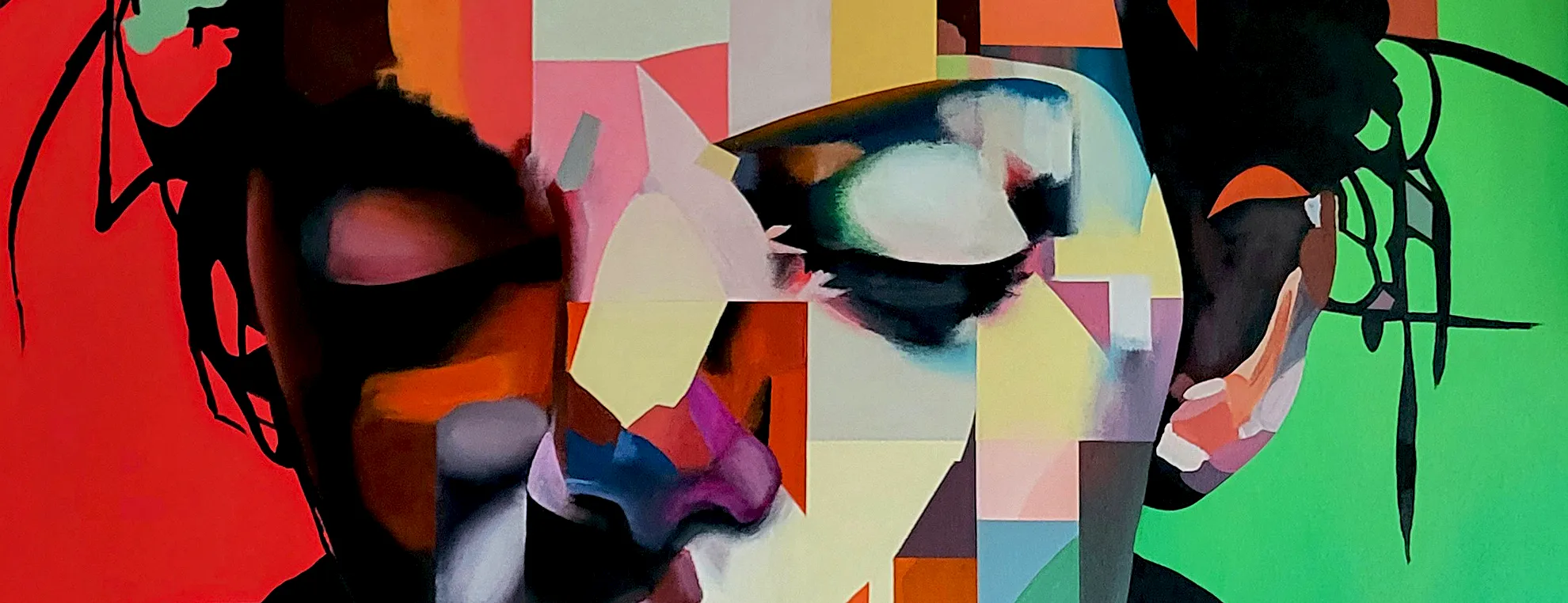
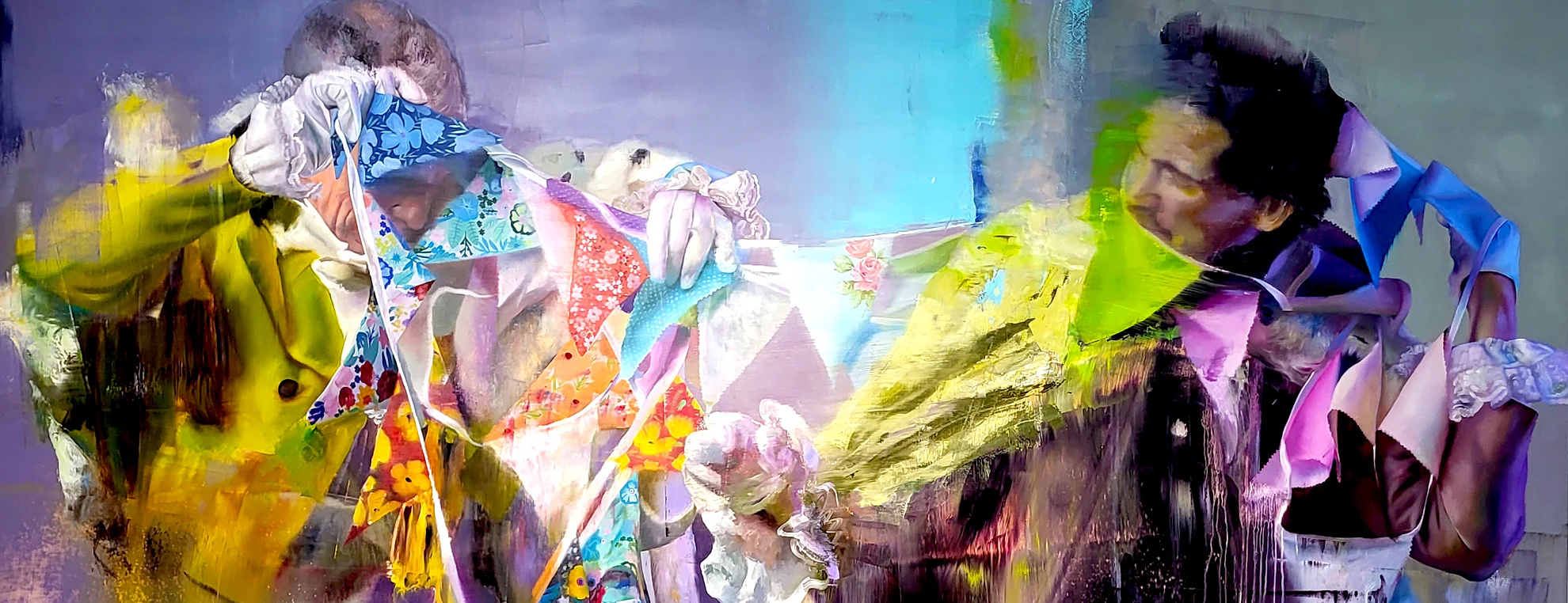
What draws me to his work is the balance — that deliberate tension between abstraction and realism.
On one level, you see classically rendered figures. There’s confidence in the anatomy, the fabric, the gesture. But then the structure begins to break down. Paint drips. Backgrounds fracture. Faces dissolve into sweeping movements of colour.
What appears controlled becomes disrupted.
As someone working within abstract portraiture, I’m always interested in how that balance is handled. Too much realism and the work becomes illustrative. Too much abstraction and it can lose its emotional anchor.
Harrington manages that tension exceptionally well.
There’s also a political undercurrent running through the work. The figures often feel historical — almost militaristic — yet unstable, as if they’re both emerging and collapsing at the same time.
And despite those classical references, there’s still a clear street art influence. The drips, splashes and raw textures prevent the work from feeling overly refined. There’s movement in it. A sense that it hasn’t been completely contained.
Experiencing Pallium in Chelsea
The setting of Ben Brown Fine Arts creates an interesting contrast.
The gallery itself is clean and controlled, which only amplifies the energy within the paintings. Pallium — referencing a garment associated with authority — feels like an appropriate title. Many of the figures carry a sense of status or ceremony, yet they’re caught mid-collapse.
Cloth twists. Bodies turn. Paint cuts across the surface with force.
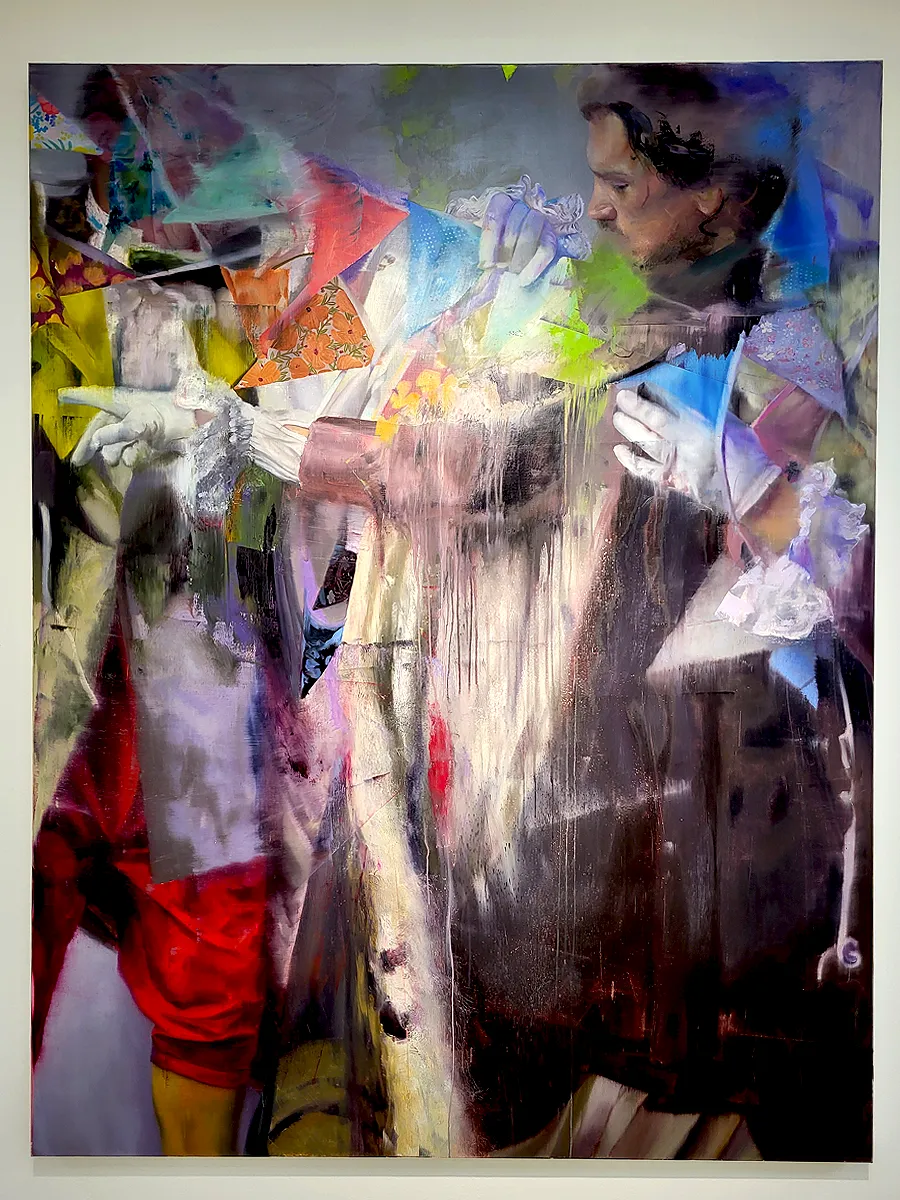
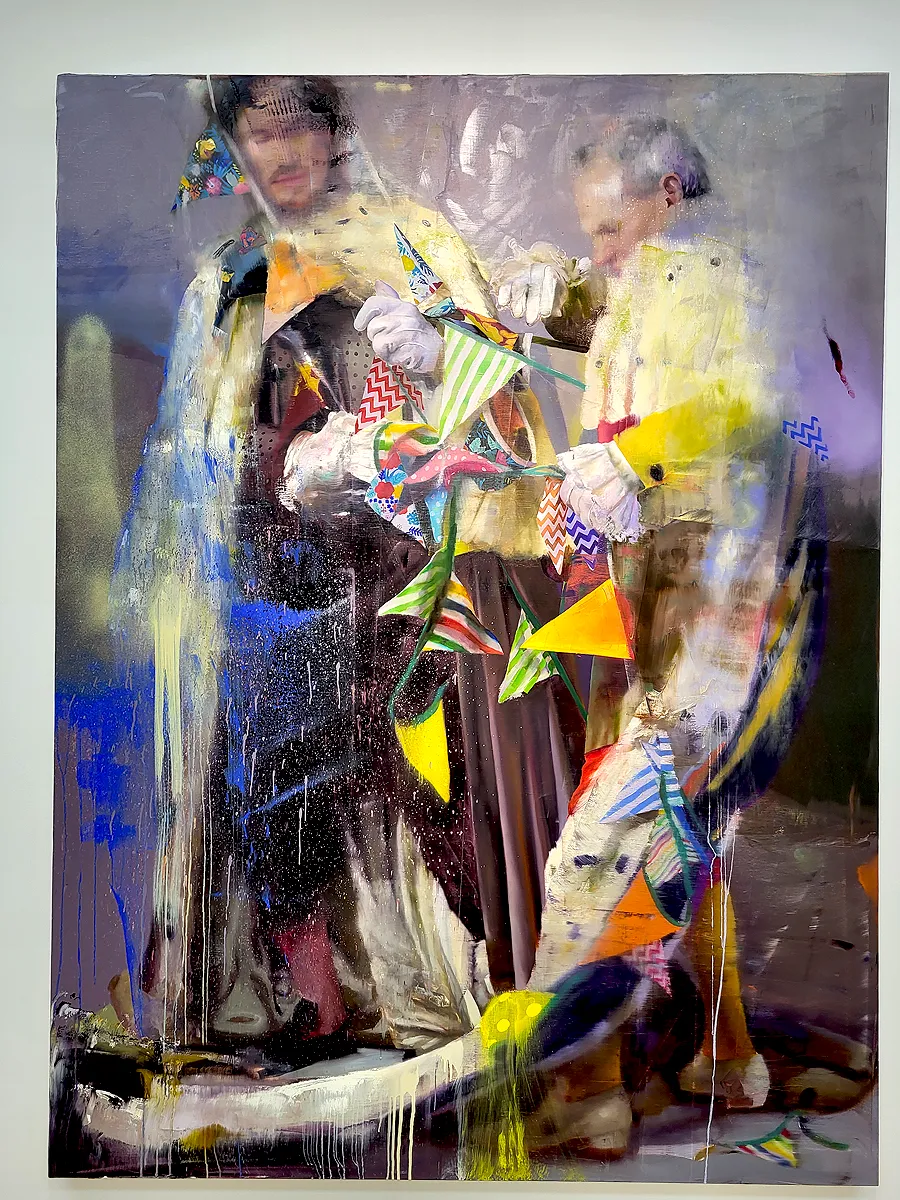
Figures shifting between control and disruption — a balance that sits at the core of Harrington’s work
What struck me most was the physicality of the work.
Online images flatten everything. In person, you see the layers. The weight of the paint. The areas that have been reworked, scraped back, pushed forward again.
You get a sense of the struggle behind the image.
Standing in front of the work, I found myself moving constantly — stepping closer, then back, then in again. Up close, it’s all gesture and abstraction. From a distance, it resolves into something figurative and composed.
That shift between chaos and control is what holds your attention.
Why Seeing Work in Real Life Still Matters
One of the biggest reminders from the visit was how much effort sits behind work like this.
On screen, it’s easy to forget the physical reality of painting — the scale, the repetition, the decisions that get made and remade.
In person, you notice everything.
Where paint has been built up. Where it’s been pulled back. Where something hasn’t quite resolved — and has been left that way deliberately.
You’re reminded that what looks effortless rarely is.
And as artists, that’s important. It resets expectations. It brings things back to the reality of making.
From Chelsea to Covent Garden
After leaving Chelsea, I made my way across London to Covent Garden to visit The Edit Gallery and see an exhibition by Mister Samo.
The contrast was immediate.
Covent Garden carries a completely different energy — louder, more crowded, more transient. It feels closer to the street, which suits the work.
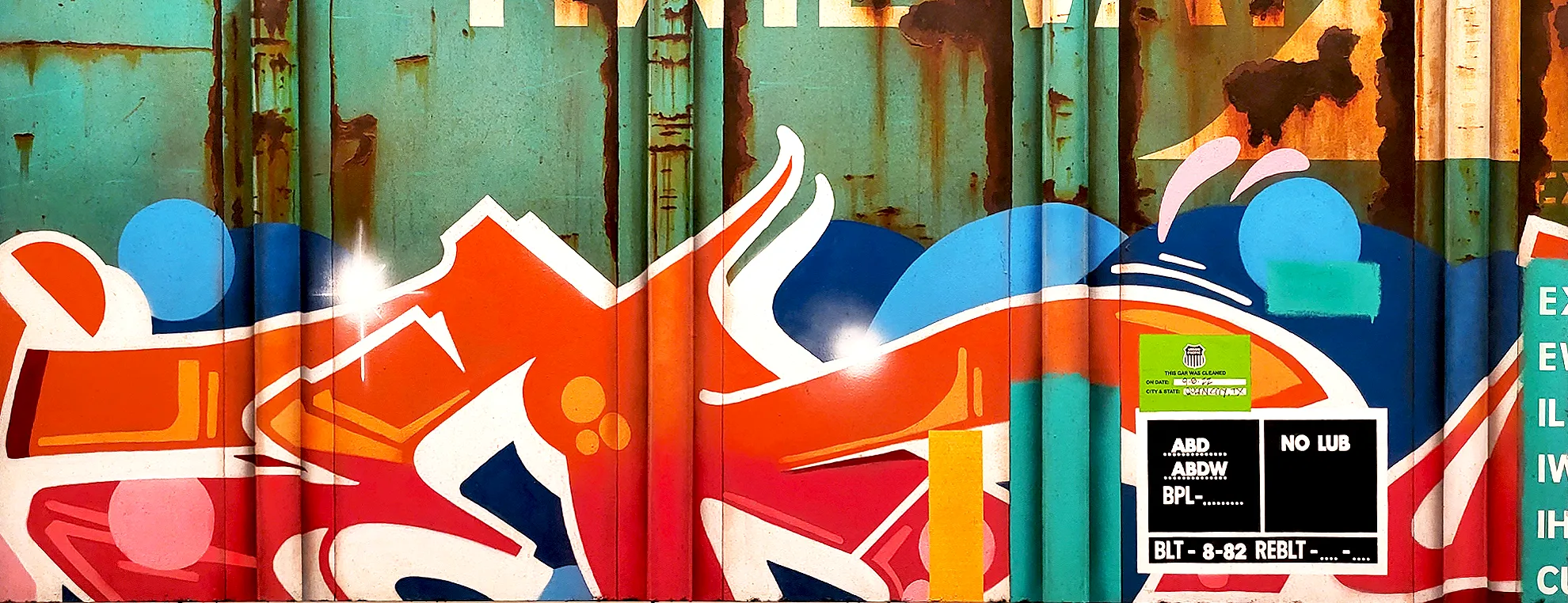
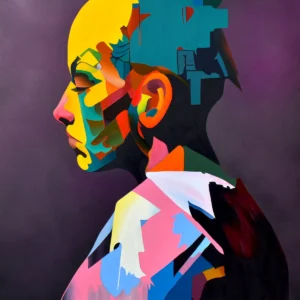
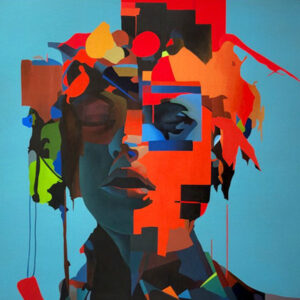
Mister Samo’s pieces lean into that. Bold colour. Strong graphic language. Work that communicates quickly and directly.
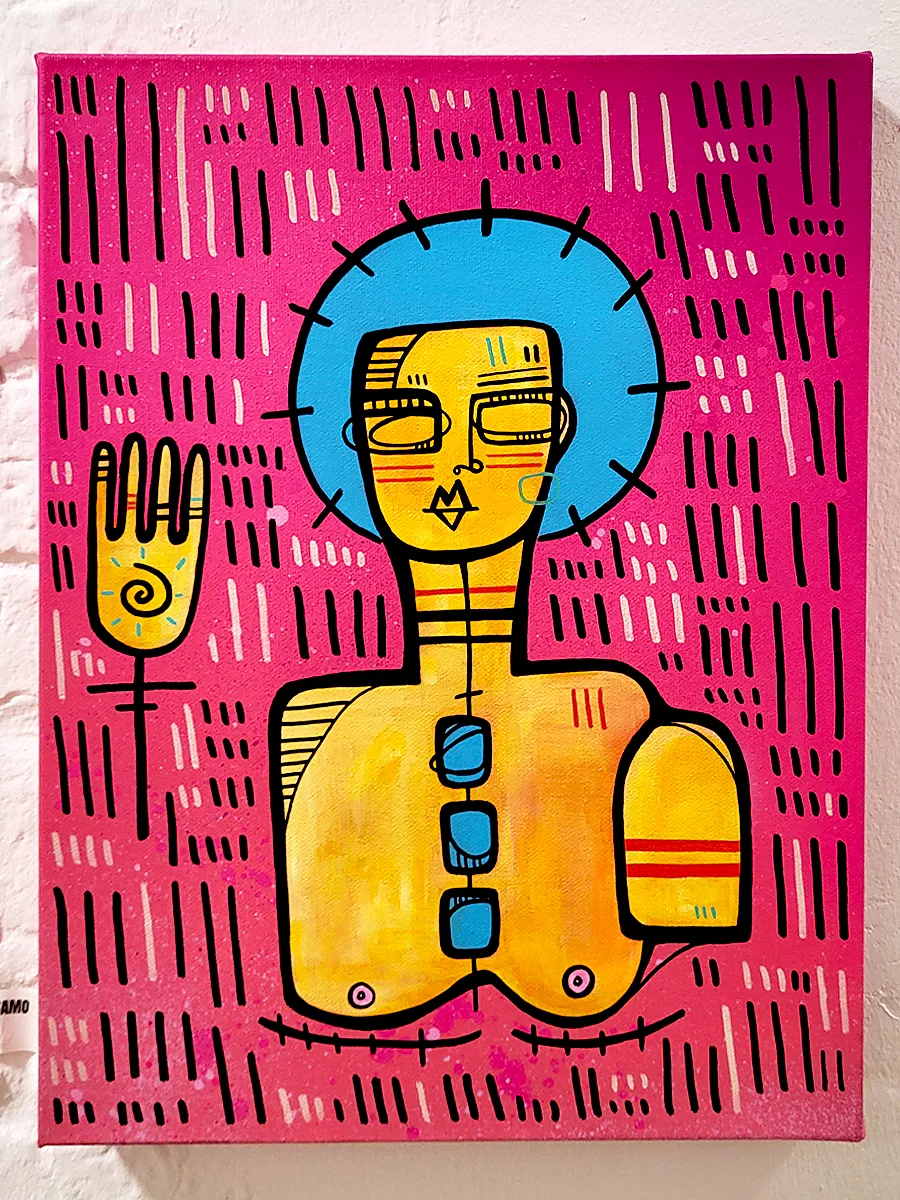
A more immediate visual language — bold, direct, and built to communicate quickly
Where Harrington’s work builds through tension and layering, Mister Samo’s feels immediate. Confident. Designed to land straight away.
Seeing both in the same day made that contrast even clearer.
What Stayed With Me
Days like this are important.
Working in a studio can be isolating. You get used to your own process, your own pace, your own way of seeing things. Stepping outside of that and engaging with other work shifts your perspective.
Harrington’s work reinforced the importance of balance — allowing control and disruption to exist in the same space.
Mister Samo’s work highlighted the power of clarity — of making something that communicates without hesitation.
Both approaches are valid. Both serve different purposes.
Why It Still Matters to Make the Trip
London remains one of the most important places for contemporary art.
Within a single day, you can move between very different approaches, styles, and ideas. That range is valuable. It challenges you. It expands what you consider possible.
For artists working outside the city, making the effort to visit still matters.
Not just for inspiration, but for perspective.
Back to the Studio
By the time I left, I wasn’t just thinking about the work I’d seen.
I was thinking about my own.
That’s usually the sign of a worthwhile visit.
Standing in front of Pallium, watching those figures break apart and reassemble through paint, there was a familiar feeling — the one that quietly pushes you back into the studio.
And that, more than anything, is why days like this matter.